Plantation Shutters vs Roller Blinds in Australia: Cost per m², Thermal Insulation & Room-by-Room Guide
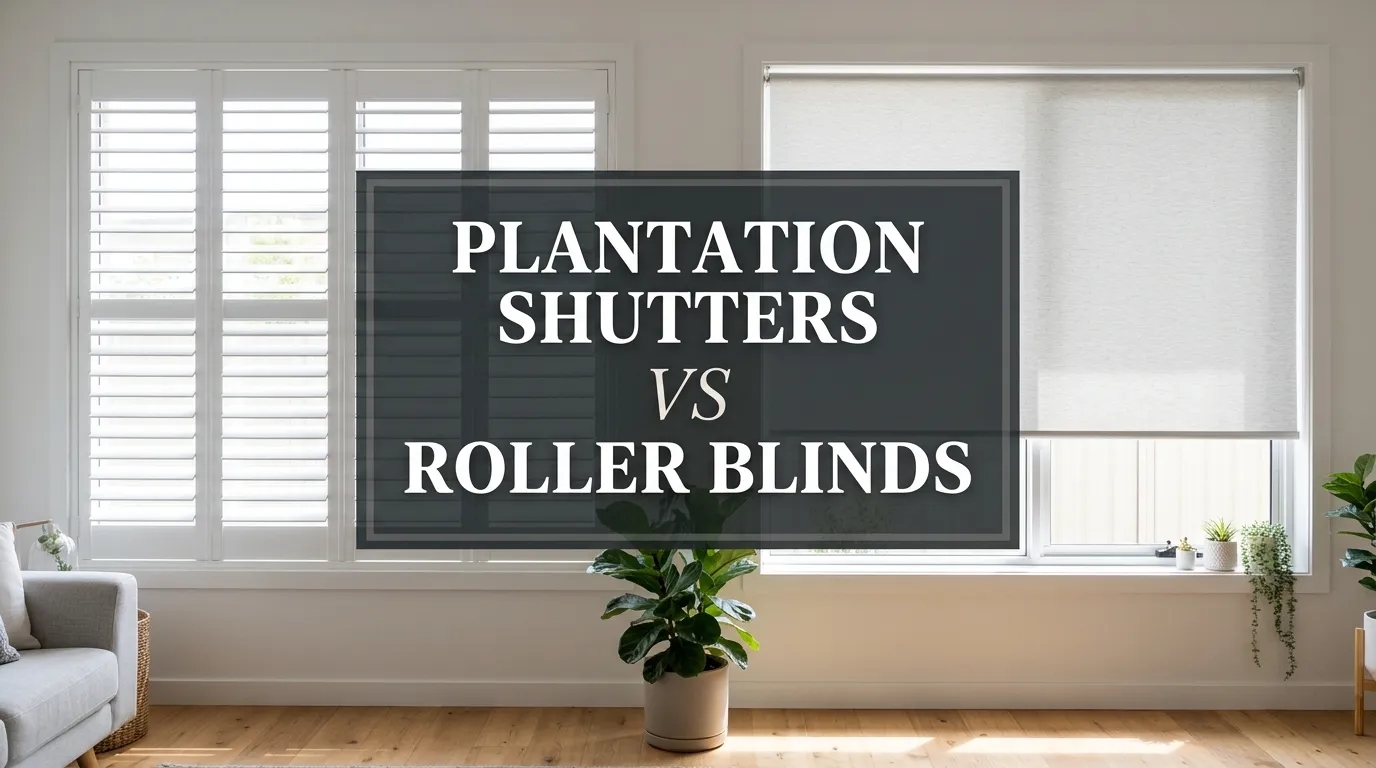
Choosing between plantation shutters and roller blinds can significantly affect your home's appearance, privacy, natural light and indoor temperature. Both window coverings suit Australian homes, but they offer different levels of light control, insulation, maintenance and design flexibility. Plantation shutters feature solid or adjustable louvres within a fitted frame, while roller blinds use a fabric panel that moves vertically to cover the window.
However, choosing the right option involves more than comparing appearance. The cost per square metre, window dimensions, material selection and room requirements all influence the final decision. In this guide, we compare plantation shutters and roller blinds in Australia, examine their thermal insulation and pricing, and explain which option suits different rooms, helping you choose a window covering that balances comfort, functionality and budget.
In this blog
- What Is the Difference Between Plantation Shutters and Roller Blinds?
- How Much Do Plantation Shutters and Roller Blinds Cost Per m² in Australia?
- Are Plantation Shutters or Roller Blinds Better for Thermal Insulation?
- Which Is Better for Light Control, Privacy and Everyday Comfort?
- Which Is Better for Each Room in an Australian Home?
- How Do Plantation Shutters and Roller Blinds Compare in Durability and Maintenance?
- Are Plantation Shutters Worth the Higher Initial Investment?
- How Do You Choose Between Plantation Shutters and Roller Blinds?
- Conclusion
- FAQS
What Is the Difference Between Plantation Shutters and Roller Blinds?
Plantation shutters and roller blinds are two popular window-covering options for Australian homes, but they use different structures and operating mechanisms. Plantation shutters consist of framed panels with adjustable horizontal louvres, while roller blinds use a fabric sheet that winds around a horizontal tube above the window. This structural difference affects how each product controls natural light, privacy, ventilation and window access.
Understanding how blinds and shutters work makes it easier to compare their materials, appearance, and practical functions. It also helps homeowners identify which option best suits their window dimensions, interior design, and everyday requirements.
Explore Blinds & ShuttersWhat Are Plantation Shutters and How Do Their Adjustable Louvres Work?
Plantation shutters are rigid window coverings made from framed panels containing adjustable horizontal louvres. The louvres rotate to control the amount of daylight, airflow and visibility through the window. Homeowners can tilt the louvres to filter sunlight, maintain privacy or allow more natural light into a room.
Most plantation shutters include a frame fitted inside or around the window opening. The panels attach to the frame using hinges, allowing homeowners to swing them open when they need full access to the window, handle or flyscreen. A tilt rod or concealed control mechanism adjusts the louvres together, depending on the shutter design.
Manufacturers commonly produce plantation shutters using materials such as:
Timber: Provides a natural wood grain and a traditional interior finish. Its suitability depends on the timber species, coating and exposure to moisture.
PVC: Uses a synthetic polymer construction that offers a practical option for many moisture-prone indoor spaces. Some designs include internal reinforcement to support wider panels.
Aluminium: Provides a metal construction for selected shutter applications, including products designed for external exposure.
Louvre width, panel configuration, frame design and material affect the shutter's appearance and operation. Wider louvres create a more open visual appearance, while narrower louvres provide a different balance of visibility and privacy.
What Are Roller Blinds and How Does Their Roller Mechanism Work?
Roller blinds are fabric window coverings that move vertically by winding around a horizontal tube mounted above the window. When homeowners lower the blind, the fabric unrolls across the window opening. When they raise it, the fabric winds back onto the tube.
A standard roller blind contains several components:
Roller tube: Holds the fabric and rotates as the blind moves.
Fabric panel: Covers the window and controls light transmission and privacy.
Operating mechanism: Uses a chain drive, spring system or motor to raise and lower the fabric.
Bottom rail: Adds weight and helps the fabric hang evenly.
Mounting brackets: Secure the roller assembly to the window frame, wall or ceiling.
The fabric determines how much light passes through the blind. Roller blind ranges commonly include three main fabric categories:
Blockout fabric: Restricts light passing through the fabric and provides greater privacy when the blind is lowered.
Light-filtering fabric: Softens incoming daylight while allowing some natural light into the room.
Sunscreen fabric: Reduces glare and filters sunlight while maintaining some outward visibility, depending on its openness and lighting conditions.
Homeowners can operate roller blinds using a manual chain, spring-assisted mechanism or motorised system. Motorised blinds allow users to control the fabric through a remote or compatible smart-home system, depending on the product.
This relatively simple construction allows roller blinds to suit different window sizes and interior styles. Homeowners can also choose fabrics with different colours, textures and light-filtering properties to match their room requirements.
Ready to Transform Your Home's Flooring?
Get expert guidance on carpets, hybrid, timber, vinyl & laminate flooring. Book a free in-home consultation with our specialists today!
How Do Plantation Shutters and Roller Blinds Differ in Construction, Materials and Operation?
The main difference is that plantation shutters use adjustable rigid louvres within framed panels, whereas roller blinds use flexible fabric that moves vertically across the window. These designs provide different ways to control light, privacy and access.
Plantation shutters provide adjustable light control without raising the entire window covering. Homeowners can tilt the louvres while keeping the panels closed, or open the panels when they need access to the window.
Roller blinds provide a different type of control. Homeowners raise or lower the fabric to change how much of the window it covers. A blockout roller blind can cover most of the window opening when lowered, while a sunscreen fabric allows filtered daylight and some outward visibility.
The choice also depends on the desired interior appearance. Plantation shutters create a defined frame around the window, while roller blinds offer a simpler finish that can blend with walls and furnishings. Homeowners should compare these construction and operating differences before assessing the cost, thermal performance and suitability of each option for individual rooms.
How Much Do Plantation Shutters and Roller Blinds Cost Per m² in Australia?
The cost of plantation shutters and roller blinds in Australia depends on the material, window dimensions, fabric type and installation requirements. Plantation shutters are commonly priced by square metre or panel, while roller blinds are often quoted per window or individual blind. This difference matters because a price per window does not represent a consistent cost per square metre unless the window dimensions are also known.
As an indicative guide, internally fitted plantation shutters can cost approximately 300-750 per m² installed, depending on the material and product specification. Custom roller blinds commonly cost around 150-350 per window supplied and installed, although premium fabrics, larger openings and motorised systems can increase the price. These are indicative Australian price ranges rather than fixed quotes. Homeowners should confirm whether the quoted price includes GST, measuring, delivery, installation and hardware.
How Much Do Plantation Shutters Cost Per m² by Material?
Plantation shutter prices vary according to the material, panel construction and finish. PVC and polymer shutters generally sit at the more affordable end of the market, while premium timber and selected aluminium products can cost more. The following ranges provide an indicative guide to internal plantation shutter pricing in Australia.
PVC plantation shutters offer a practical option for homeowners who want a relatively affordable window covering. Their moisture-resistant construction makes them suitable for many kitchens, bathrooms and other indoor areas where humidity can affect certain materials. Some PVC shutters also include internal reinforcement to improve panel stability.
Composite shutters use engineered materials that can combine different structural and surface properties. Their prices depend on the core material, finish and manufacturer, so homeowners should check the product specification rather than assume that every composite shutter has the same performance.
Timber plantation shutters provide a natural grain and premium appearance. Basswood is a common option because it is relatively lightweight and can be finished in different colours. However, timber products generally require more consideration in areas exposed to moisture or changing humidity.
Aluminium shutters use a metal construction and are available in selected internal and external applications. Their price depends on the coating, panel design and intended exposure. Homeowners should compare products designed for the same application because an external aluminium shutter is not directly equivalent to an internal timber or PVC plantation shutter.
For a clearer estimate, consider a standard window measuring 1,200 mm wide by 1,500 mm high. Its surface area is 1.8 m². At an indicative installed rate of 300-430 per m², PVC plantation shutters would cost approximately 540-774 for that opening. A timber shutter at 410-650 per m² would cost approximately 738-1,170.
These calculations provide a comparison based on window area, not a guaranteed quote. Minimum job charges, panel configuration, frame requirements and installation complexity can change the final price.
How Much Do Roller Blinds Cost Per m² by Fabric Type?
Roller blind suppliers commonly price custom products per blind or window rather than publishing a consistent national rate per square metre. The final cost depends on the fabric range, finished width and drop, operating mechanism and mounting requirements.
The three common fabric categories have different functions:
Blockout roller blinds: Use opaque fabric to restrict incoming light and provide greater privacy when fully lowered. They are popular in bedrooms and media rooms.
Sunscreen roller blinds: Use an open-weave fabric to reduce glare and filter sunlight while maintaining some outward visibility. Their performance depends on fabric openness and the direction of sunlight.
Light-filtering roller blinds: Diffuse incoming daylight and soften the brightness of a room without creating complete darkness.
As an indicative Australian guide, custom roller blinds can cost approximately 150–350 per window supplied and installed. Some suppliers publish starting prices around $180 for sunscreen blinds, $190 for light-filtering blinds and $220 for blockout blinds. These starting prices vary by supplier, fabric range, window size and included services.
These are supplier-specific starting prices, not fixed national averages. They should not be treated as direct per-m² rates or as guaranteed prices for every window.
To compare roller blinds with plantation shutters, use the same 1,200 mm × 1,500 mm window. This opening measures 1.8 m². A custom roller blind quoted at 150-350 for the window would cost approximately 83-194 per m² when the per-window price is divided by its area.
This calculation is useful for comparing that particular opening, but it does not establish a national roller-blind market rate per square metre. A wider or taller window would produce a different calculated rate, even if the supplier used the same fabric and pricing structure.
What Is Included in Supply-Only and Supply-and-Installation Prices?
A supply-only quote covers the window covering itself, while a supply-and-installation quote includes the work required to fit it. However, suppliers do not always include the same services in their advertised prices. Homeowners should check the written quote before comparing two offers.
Plantation shutter installation involves more than attaching panels to a window. The installer must check the opening, position the frame, secure the hinges and confirm that each panel operates correctly. Uneven walls, restricted reveals and unusual window shapes can increase installation time.
Roller blind installation usually involves securing the brackets, fitting the roller tube, aligning the fabric and checking the operating mechanism. A straightforward window may require less installation work than a large opening, a ceiling-mounted blind or a window with restricted access.
What Factors Affect the Cost of Plantation Shutters and Roller Blinds?
Several product and installation details influence the final cost of both window coverings. Two windows with similar dimensions can still receive different quotes because their materials, configurations and fitting requirements may differ.
1. Window dimensions and total area
Larger windows require more shutter material or blind fabric. Plantation shutter pricing often increases with the total panel area, while roller blind suppliers consider the finished width and drop when calculating the price. Very small orders may also attract minimum manufacturing or installation charges.
2. Material and fabric selection
PVC, composite and timber shutters have different manufacturing costs and product characteristics. Roller blind prices also change according to fabric quality, opacity, weave and brand. Premium sunscreen fabrics or specialist blockout materials can cost more than standard fabric ranges.
3. Custom sizing and window configuration
Made-to-measure products require accurate measurements for the window opening and mounting position. Bay windows, arched openings, unusually wide windows and sliding doors may need additional panels, specialised tracks or different mounting arrangements. These requirements can increase manufacturing and installation costs.
4. Measurement and installation
Some suppliers include a professional measure and installation service in their package price. Others charge separately for site visits, delivery or installation labour. Upper-storey windows, uneven openings and difficult access can also increase the labour required.
5. Operating mechanisms and motorisation
Manual roller blinds generally cost less than motorised systems. Motorisation adds the cost of the motor, power supply or rechargeable battery, remote control and any compatible smart-home accessories. Plantation shutters can also have specialised operating configurations, including motorised louvre controls, which increase the product price.
6. Additional components and finishes
Pelmet covers, decorative frames, upgraded brackets, specialist coatings and non-standard colours can increase the final quote. For plantation shutters, the number of panels, hinge configuration and louvre width can also affect manufacturing costs. For roller blinds, chain type, bottom rails and fascia options may change the price.
Homeowners should compare quotes with the same window measurements, material or fabric specification, operating mechanism and installation scope. This makes it easier to identify whether a higher price reflects better product specifications or simply includes more services.
Which Window Covering Offers Better Long-Term Value for Money?
Plantation shutters and roller blinds offer different types of long-term value. Plantation shutters usually require a higher initial investment, but their rigid construction, adjustable louvres and architectural appearance can make them a suitable long-term fixture. Roller blinds generally have a lower upfront cost and offer more flexibility when homeowners want to change fabric, colour or light-control requirements.
Plantation shutters may offer better value when homeowners prioritise:
Long-term use: Quality shutters can provide years of service when correctly installed and maintained.
Adjustable light control: Tilting louvres allow homeowners to manage daylight without raising the entire covering.
Structured interior design: Shutters create a defined window finish that suits many traditional and contemporary interiors.
Material-specific durability: PVC can suit many moisture-prone indoor areas, while timber offers a natural finish in more suitable environments.
Roller blinds may offer better value when homeowners prioritise:
Lower initial cost: Standard manual roller blinds generally require a smaller upfront investment.
Fabric flexibility: Blockout, sunscreen and light-filtering fabrics provide different levels of light control.
Simple operation: A manual chain or motorised mechanism allows the fabric to move vertically.
Straightforward replacement: Homeowners can update the fabric or replace an individual blind without changing every window covering in the room.
Maintenance and replacement costs also influence long-term value. Plantation shutters need regular dusting and cleaning around their louvres, hinges and frames. Roller blinds require fabric care and occasional attention to chains, brackets or motors. Fabric condition, sunlight exposure, product quality and everyday use all affect how long either option remains in good condition.
For example, a homeowner fitting several bedrooms on a limited budget may find manual blockout roller blinds more practical. Someone renovating a living room and prioritising a permanent, structured finish may prefer plantation shutters. Neither option is automatically cheaper over its entire lifespan because the result depends on the initial specification, maintenance needs and replacement frequency.
Before choosing, compare the complete installed cost, expected maintenance and suitability for each room. A lower purchase price does not always mean better long-term value, just as a more expensive shutter does not guarantee a better result for every window.
Blinds And Shutters MelbourneAre Plantation Shutters or Roller Blinds Better for Thermal Insulation?
Plantation shutters and roller blinds can both improve a room's thermal comfort, but neither provides the same insulation as upgrading the window itself. Their performance depends on the material, fit, operating position and amount of air trapped between the covering and the glass. A well-fitted blockout roller blind can reduce heat transfer when it is fully lowered, while plantation shutters create an additional barrier through their solid panels and adjustable louvres.
However, thermal insulation is different from sunlight and glare control. A sunscreen roller blind can reduce direct sunlight and glare without providing the same insulating effect as a blockout blind. Plantation shutters also allow homeowners to adjust incoming daylight, but their louvres may leave small gaps that affect how effectively they limit heat movement. The better choice depends on the window's exposure, glazing, climate and the room's heating and cooling needs.
How Do Plantation Shutters Reduce Heat Transfer Through Windows?
Plantation shutters reduce heat transfer by creating a barrier between the window glass and the room. When homeowners close the shutter panels and tilt the louvres, the covering limits direct airflow and creates an enclosed space near the window. This space can slow heat movement between the glass and the indoor environment.
The material and construction influence the level of thermal resistance. PVC and composite shutters have solid profiles that provide a physical barrier, while timber shutters also add a layer between the glass and the room. However, the shutter material alone does not determine performance. Panel thickness, frame design, louvre closure and installation gaps also affect the result.
Plantation shutters offer several practical benefits:
Reduced direct heat exposure: Closed louvres limit direct sunlight entering the room, particularly when the window receives strong afternoon sun.
An additional barrier: The shutter panels create another layer between the glazing and indoor air.
Adjustable daylight: Homeowners can tilt the louvres to balance natural light, privacy and solar exposure.
Year-round use: The panels can remain closed during hot or cold periods and open when homeowners want more daylight or ventilation.
However, plantation shutters are not airtight. Small gaps around the louvres, frame and window reveal can allow air movement. Their thermal performance also varies with the shutter design and the type of glazing behind them. Homeowners should therefore treat shutters as an additional window covering rather than a replacement for insulated glazing or effective window sealing.
Do Blockout Roller Blinds Keep Rooms Cooler in Summer and Warmer in Winter?
Blockout roller blinds can help maintain indoor comfort by limiting direct sunlight and reducing heat exchange through the window when fully lowered. Their fabric blocks most incoming visible light, while the layer of air between the blind and glass can provide additional resistance to heat transfer.
During summer, a blockout blind helps reduce direct solar radiation entering the room. This benefit is particularly useful for windows exposed to strong afternoon sunlight. However, homeowners should understand how to fit roller blinds correctly, as their effectiveness depends on fabric colour, construction, reflective backing, fit, and distance from the glass. A light-coloured or reflective backing can help reject more solar energy than a dark fabric that absorbs sunlight.
During winter, a lowered blockout blind can reduce heat loss through the window by creating an additional barrier between the cold glass and the room. The improvement depends on how closely the blind fits the window opening. Gaps along the sides, top and bottom can allow air to circulate, reducing the insulating benefit.
A blockout roller blind can support thermal comfort in these ways:
Summer heat control: Limits direct sunlight and reduces solar heat entering through the covered area.
Winter comfort: Adds a fabric layer and an air gap that can slow heat transfer from the room to the glass.
Light exclusion: Blocks most incoming daylight when correctly fitted, making it useful for bedrooms and media rooms.
Privacy: Provides strong daytime and nighttime privacy when the blind fully covers the window.
Standard blockout fabric does not automatically provide high thermal insulation. Homeowners should compare the fabric's thermal or solar performance specifications rather than relying only on its blockout rating. A close-fitting blind with suitable backing can perform better than a loosely fitted blind with the same light-blocking classification.
How Do Sunscreen and Light-Filtering Roller Blinds Affect Solar Heat Gain?
Sunscreen and light-filtering roller blinds manage daylight differently from blockout blinds. They allow some sunlight to pass through the fabric, so their main purpose is to control glare, brightness and visibility rather than provide complete light exclusion or maximum insulation.
Sunscreen roller blinds use an open-weave fabric that filters sunlight while maintaining some outward visibility. The fabric reduces glare and can limit the amount of solar radiation entering the room, depending on its openness factor, colour and solar performance. A lower openness factor generally provides less outward visibility and greater solar screening, although the actual result depends on the fabric specification.
Light-filtering roller blinds use a more closed fabric structure to soften incoming daylight. They reduce harsh brightness and provide daytime privacy in many conditions, but they do not block all light. Their ability to reduce solar heat gain varies according to fabric density, colour and coating.
The distinction matters when choosing blinds for living rooms, kitchens and home offices. Sunscreen fabrics can help maintain natural light and views while reducing glare. Light-filtering fabrics create a softer indoor atmosphere. Blockout fabrics suit rooms where darkness, privacy and stronger control over direct sunlight are priorities.
Homeowners should also consider the fabric's solar reflectance, solar absorptance and solar transmittance where manufacturers provide these values. These specifications give a clearer indication of solar performance than terms such as sunscreen or light-filtering alone.
Which Window Covering Performs Better in Australian Summer and Winter Conditions?
Neither plantation shutters nor roller blinds provide the best thermal performance in every Australian home. The result depends on the local climate, window orientation, glazing and product specifications. A well-fitted blockout blind may offer better control over direct sunlight, while closed plantation shutters provide a durable, adjustable barrier that homeowners can use throughout the year.
In hot Australian regions, reducing unwanted solar heat gain is especially important for west- and north-facing windows exposed to strong sunlight. Homeowners can close plantation shutter louvres or lower suitable roller blinds before the room heats up. Reflective-backed blockout fabrics and solar-control sunscreen fabrics may provide useful options for these windows, depending on their tested performance.
In cooler regions and during winter, both products can add a layer between the glass and indoor air. A close-fitting blockout blind can help reduce heat loss when lowered at night. Plantation shutters also provide an additional barrier, although gaps around the panels and louvres can limit their effectiveness.
For bedrooms, blockout roller blinds are often a practical choice when darkness and privacy are priorities. For living areas, plantation shutters or sunscreen blinds can provide adjustable daylight control. In rooms with large windows and strong solar exposure, homeowners may also consider combining a window covering with suitable external shading.
The most effective option is the one that addresses the room's main heat source and fits the window properly. Homeowners should compare product specifications and installation details instead of assuming that one type of covering always performs better.
How Do Window Orientation, Glazing and Installation Gaps Affect Thermal Performance?
Window orientation, glazing and installation quality can influence thermal performance as much as the window covering itself. A covering fitted to a poorly insulated, single-glazed window may produce a different result from the same product installed over double glazing. Homeowners should assess the entire window system before choosing plantation shutters or roller blinds.
Window orientation and sun exposure
The direction a window faces affects the amount and timing of sunlight it receives. North-facing windows in much of Australia can receive substantial sunlight during winter, while west-facing windows often experience strong afternoon sun in summer. East-facing windows receive morning sunlight, which can also increase indoor temperatures. The best covering depends on the exposure and the room's intended use.
Glazing type and window condition
Single glazing generally allows more heat transfer than well-designed double glazing. Double-glazed windows use two panes separated by an air or gas-filled cavity to reduce heat movement. Low-emissivity coatings can further improve thermal performance by limiting radiant heat transfer.
A window covering adds another layer, but it does not correct damaged seals, poorly fitted frames or inefficient glazing. Homeowners should address draughts and window defects alongside their choice of shutters or blinds.
Installation gaps and product fit
Gaps around a window covering allow air to move between the glass and the room. This movement can reduce the thermal benefit of the covering, particularly when the product is intended to create an insulating air space.
Plantation shutters: Measure the window reveal accurately so the frame and panels fit correctly. Check the gaps around the frame and between closed louvres.
Roller blinds: Select a suitable inside- or outside-mount installation. Check side gaps, the distance from the glass and whether the fabric covers the required window area.
Large or irregular windows: Use made-to-measure products to account for window dimensions, obstructions and frame variations.
A professional measure and installation can help reduce fitting errors and improve how effectively the covering performs. However, no standard shutter or roller blind should be described as airtight unless the product has been tested and rated for that purpose.
Ultimately, homeowners should consider window orientation, glazing efficiency, fabric or shutter specifications and installation gaps together. These factors determine how effectively plantation shutters or roller blinds help manage heat, glare and indoor comfort throughout the year.
Technical note for accuracy: In the Australian context, avoid treating all north-facing windows as the biggest summer heat source. West-facing windows can receive intense low-angle afternoon sun in summer, while north-facing windows can provide useful winter solar warmth. Adjustable shading helps manage this seasonal difference. Also, external shading generally prevents more solar heat from reaching the glass than an internal blind or shutter.
Blinds And Shutters SydneyWhich Is Better for Light Control, Privacy and Everyday Comfort?
Plantation shutters and roller blinds offer different levels of light control, privacy and everyday convenience. Plantation shutters use adjustable louvres to regulate daylight and visibility without opening the panels completely. Roller blinds control light and privacy through fabric selection and the height of the lowered blind. The better option depends on whether homeowners prioritise adjustable daylight, complete privacy, bedroom darkness or unobstructed window views.
Plantation shutters provide more flexible control throughout the day because homeowners can change the louvre angle while keeping the panels closed. Roller blinds offer simpler operation and a wider range of fabric choices, including blockout, sunscreen and light-filtering options. Understanding these differences helps homeowners select suitable window coverings for bedrooms, living rooms, bathrooms and other spaces.
Which Window Covering Provides Better Daytime Privacy?
Plantation shutters generally provide more flexible daytime privacy because their adjustable louvres allow homeowners to limit outside visibility while maintaining natural light. By tilting the louvres, homeowners can reduce direct sightlines through the window without covering the entire opening. The level of privacy depends on the louvre angle, window height and viewing position outside.
Roller blinds provide daytime privacy according to their fabric type. Blockout fabrics prevent visibility through the covered area when fully lowered. Sunscreen fabrics filter sunlight while maintaining some outward visibility, but they do not guarantee privacy in every lighting condition. When indoor lighting becomes brighter than outdoor lighting, people outside may be able to see through some sunscreen fabrics.
Light-filtering roller blinds diffuse daylight and provide varying levels of privacy, depending on their opacity and construction. However, they may not provide complete privacy at night when indoor lights are switched on.
For street-facing living rooms and windows overlooking neighbouring properties, plantation shutters can provide a useful balance between daylight and privacy. For bedrooms and bathrooms where complete visual coverage is more important, a suitable blockout roller blind may be more practical. Homeowners should also consider window height, neighbouring building positions and the direction of outside sightlines.
Which Option Offers Better Bedroom Light Blocking?
Blockout roller blinds generally provide better bedroom light blocking than standard plantation shutters. Their continuous fabric panel covers the window opening and prevents most visible light from passing through the fabric. When correctly measured and installed, blockout blinds can create a darker sleeping environment for people sensitive to early morning sunlight or external lighting.
Plantation shutters reduce incoming daylight when homeowners close the louvres and panels. However, small gaps between the louvres, around the frame and between panels can allow some light into the room. The amount of light leakage depends on the shutter design, panel configuration and installation.
The main differences include:
Blockout roller blinds: Provide strong light exclusion through an opaque fabric panel. Side gaps may still allow light around the edges.
Plantation shutters: Reduce direct sunlight through closed louvres but may allow small amounts of light through panel and frame gaps.
Light-filtering roller blinds: Soften daylight but do not create a dark room.
Sunscreen roller blinds: Reduce glare and filter sunlight while allowing some daylight into the bedroom.
Homeowners who need stronger darkness can consider a blockout roller blind with side channels or a suitable pelmet, depending on the product system. These additions can reduce light leakage around the fabric edges.
Plantation shutters may still suit bedrooms where adjustable daylight, privacy and interior appearance are more important than complete darkness. However, for shift workers, light-sensitive sleepers and children's bedrooms, a well-fitted blockout roller blind is often the more suitable choice.
How Do Adjustable Shutter Louvres Compare With Roller Blind Fabrics?
Plantation shutters control daylight by changing the angle of their horizontal louvres, while roller blinds control it through fabric opacity and the amount of window covered. This difference gives homeowners two distinct ways to manage natural light.
Shutter louvres can tilt to redirect incoming sunlight. Homeowners can close them for greater privacy, angle them to admit filtered daylight or open the panels to expose the full window. This adjustment allows ongoing control without repeatedly raising or lowering the entire covering.
Roller blinds use different fabric constructions to achieve specific lighting effects:
Blockout fabric: Prevents most visible light from passing through the material and creates a darker indoor environment.
Light-filtering fabric: Diffuses incoming daylight and reduces harsh brightness without completely blocking sunlight.
Sunscreen fabric: Filters direct sunlight and glare while retaining some outward visibility, depending on the fabric's openness.
Plantation shutters suit homeowners who want to adjust daylight throughout the day without changing the overall window coverage. Roller blinds suit people who prefer a specific lighting outcome, such as a dark bedroom, a softly lit living area or a glare-controlled home office.
The choice also depends on how often homeowners adjust their window coverings. Shutters allow small changes to the louvre angle, while roller blinds provide a straightforward raise-and-lower operation. Motorised roller blinds can make this process easier for large, high or hard-to-reach windows.
Which Window Covering Provides Better Ventilation and Outside Views?
Plantation shutters generally provide better ventilation flexibility and more adjustable outside views than roller blinds. Homeowners can tilt the louvres to allow airflow and maintain partial visibility while the panels remain closed. They can also swing the panels open when they want unrestricted access to the window.
However, the amount of airflow depends on the window itself. Plantation shutters do not create ventilation independently; they allow air to pass through their louvres when the window behind them is open. Closing the louvres reduces airflow and changes the level of visibility.
Roller blinds provide less flexibility for ventilation because the fabric covers the window when lowered. Homeowners must raise the blind to expose more of the window opening. Sunscreen roller blinds allow outward visibility through their open-weave fabric, but the fabric does not provide the same airflow as an uncovered window.
For living rooms and dining areas where homeowners want natural light, ventilation and adjustable views, plantation shutters offer greater flexibility. For windows where a simple fabric covering is preferred, sunscreen or light-filtering roller blinds provide practical alternatives.
Homeowners should also consider the window's flyscreen, opening direction and nearby furniture. A shutter panel may need sufficient clearance to swing open, while a roller blind requires suitable space for its brackets and roller tube. These practical details can influence everyday comfort as much as the covering's appearance.
Blinds And Shutters PerthWhich Is Better for Each Room in an Australian Home?
The best window covering depends on how each room is used, the amount of natural light it receives and its exposure to moisture, heat and outside visibility. Plantation shutters provide adjustable louvres, structured styling and flexible privacy, while roller blinds offer different fabric options for light filtering, glare reduction and room darkening.
Australian homeowners should consider each room's practical requirements before choosing between these products. A blockout roller blind may suit a bedroom, while moisture-resistant PVC shutters or suitable roller blinds may work better in a bathroom. Matching the material and operating mechanism to the room helps improve everyday comfort and long-term usability.
Are Plantation Shutters or Roller Blinds Better for Living Rooms?
Plantation shutters are a strong choice for living rooms because their adjustable louvres help homeowners balance natural light, privacy and outdoor views. They also create a defined architectural finish that suits many Australian interior styles. Homeowners can tilt the louvres to reduce glare during the day without completely darkening the room.
Roller blinds provide greater flexibility when choosing specific light-filtering properties. Sunscreen fabrics reduce glare while maintaining some outward visibility, making them useful for living rooms with large windows or attractive views. Light-filtering fabrics soften daylight, while blockout fabrics provide stronger privacy and light exclusion.
The right choice depends on the living room's orientation and furniture layout. For a west-facing living room, a suitable sunscreen or blockout fabric can help manage strong afternoon sunlight. For a living room where adjustable privacy and a permanent architectural finish matter more, plantation shutters may be the better option.
Which Window Covering Is Better for Bedrooms and Master Suites?
Blockout roller blinds are generally better for bedrooms because they provide stronger light exclusion and help create a darker sleeping environment. Their continuous fabric panel blocks most visible light when fully lowered, making them suitable for bedrooms exposed to streetlights, early morning sunlight or neighbouring properties.
Plantation shutters also provide bedroom privacy and adjustable daylight. However, small gaps around the louvres and panels may allow light into the room, even when the shutters are closed. Homeowners who prefer shutters can combine them with blockout roller blinds to improve darkness.
Bedroom requirements often include:
Light blocking: Blockout roller blinds restrict most incoming daylight when fully lowered.
Privacy: Both products provide privacy, but the result depends on fabric opacity, shutter design and installation.
Temperature control: Suitable blockout fabrics and closed shutters can add a barrier between the window and indoor space.
Appearance: Plantation shutters create a structured finish, while roller blinds offer a simpler fabric-based appearance.
Convenience: Motorised roller blinds can simplify operation for large bedroom windows.
For master suites, homeowners can also combine window coverings to achieve different levels of control. Plantation shutters provide adjustable daylight during the day, while a blockout roller blind adds stronger darkness at night. This combination can be useful where sleep quality, privacy and interior appearance are equally important.
Are Plantation Shutters or Roller Blinds Better for Kitchens?
Roller blinds are often a practical kitchen option because they offer simple operation, compact construction and easy adjustment. A suitable moisture-resistant fabric can work well in kitchens where windows receive occasional steam or humidity. Sunscreen and light-filtering fabrics also help manage glare without making the room unnecessarily dark.
Plantation shutters can suit kitchens when homeowners choose a material designed for the room's moisture conditions. PVC shutters are generally more suitable than untreated timber in areas exposed to humidity and occasional splashes. However, the product's construction, coating and manufacturer care instructions still matter.
Homeowners should consider these factors before choosing:
The position of the window is particularly important. A roller blind installed too close to a cooktop or other heat source may create a safety and maintenance concern. Plantation shutters can also collect grease and cooking residue around their louvres, so homeowners should consider cleaning requirements.
For most kitchens, a moisture-suitable roller blind offers a straightforward solution. PVC plantation shutters may be a better fit when homeowners want adjustable light control and a more permanent window finish.
Which Option Is More Suitable for Bathrooms and High-Moisture Areas?
Moisture-resistant PVC plantation shutters and appropriately rated roller blinds can both suit bathrooms, but the best choice depends on ventilation, window position and exposure to water. PVC shutters offer adjustable louvres that help balance privacy, daylight and airflow when the window is open. Their rigid construction also provides a surface that homeowners can wipe clean.
Roller blinds provide a simpler alternative, particularly when the window is positioned away from direct water exposure. Homeowners should select fabrics and operating components designed for the bathroom's humidity conditions. Standard fabrics and untreated metal components may deteriorate if they remain exposed to moisture.
For bathrooms with frequent condensation, homeowners should prioritise moisture resistance and proper ventilation. PVC plantation shutters can be useful where adjustable airflow and privacy matter. A suitable roller blind may work better for smaller windows where a compact covering is preferred.
Homeowners should avoid assuming that every PVC shutter or roller blind is waterproof. They should check the manufacturer's specifications, especially for windows close to showers, baths and other direct water sources.
Are Roller Blinds or Plantation Shutters Better for Home Offices?
Roller blinds are often a practical choice for home offices because sunscreen and light-filtering fabrics help control screen glare while maintaining natural daylight. Sunscreen roller blinds can reduce direct sunlight on computer screens without completely blocking outdoor views. Motorised operation also makes it easier to adjust blinds throughout the working day.
Plantation shutters provide another effective option when the office needs adjustable daylight and privacy. Homeowners can tilt the louvres to reduce glare on monitors while allowing some natural light into the room. Their rigid panels also create a more structured appearance that may suit a dedicated study.
Consider the following differences:
Screen glare: Sunscreen roller blinds filter direct sunlight across the window, while shutter louvres adjust the direction and amount of incoming light.
Daylight: Light-filtering fabrics soften natural light, while adjustable louvres allow homeowners to control daylight more precisely.
Video calls: Blockout or light-filtering blinds can help manage changing background brightness. Shutters also provide adjustable control over the light behind the user.
Privacy: Both options can reduce outside visibility when selected and positioned correctly.
Operation: Motorised roller blinds offer convenient adjustment, while shutters use a manual louvre and panel mechanism unless a specialised system is specified.
For offices with large screens or strong afternoon sunlight, sunscreen roller blinds are often a suitable choice. Plantation shutters may be preferable when homeowners want adjustable privacy and a permanent interior finish.
Which Window Covering Works Better for Large Windows and Sliding Doors?
Roller blinds are often more practical for large windows and sliding doors because they can cover wide openings without requiring hinged panels to swing into the room. They also come in different configurations, including multiple blinds across a wide opening, depending on the product's maximum manufacturing dimensions and operating system.
Plantation shutters can provide an attractive finish for large windows, but their suitability depends on panel size, weight, frame design and available clearance. Wider openings may require multiple shutter panels or a different configuration to maintain stable operation. Hinged panels also need enough room to open without obstructing furniture or door access.
For sliding doors used frequently throughout the day, roller blinds may offer a more convenient solution because homeowners can raise the fabric without moving large panels. However, the blind must be positioned and sized correctly to avoid interfering with door handles, tracks or access.
For large fixed windows, plantation shutters can create a strong architectural feature when the opening supports the required panel configuration. Homeowners should obtain a professional measure before choosing either product, particularly for wide, tall or irregularly shaped windows.
Ultimately, room function should guide the decision. Bedrooms often benefit from blockout roller blinds, living rooms can suit either product, and bathrooms need moisture-appropriate materials. Large windows and sliding doors require particular attention to operating clearance, product dimensions and everyday access.
Blinds And Shutters BrisbaneHow Do Plantation Shutters and Roller Blinds Compare in Durability and Maintenance?
Plantation shutters generally offer a longer-lasting, more rigid construction, while roller blinds provide a simpler mechanism and fabric-based design that may require periodic repairs or replacement. However, the lifespan of both window coverings depends on material quality, manufacturing, installation, operating frequency and exposure to sunlight or moisture.
Plantation shutters require regular dusting and occasional cleaning around their louvres, hinges and frames. Roller blinds need fabric cleaning and periodic checks of their operating mechanisms, brackets and chains. Homeowners should compare these maintenance requirements alongside the initial purchase price to understand the long-term cost of ownership.
How Long Do Plantation Shutters and Roller Blinds Last?
Plantation shutters can last for many years when homeowners select suitable materials and maintain them correctly. Their rigid panels and relatively simple operating mechanisms can withstand regular use, although hinges, louvre controls and mounting components may eventually require adjustment or repair.
Roller blinds also provide long-term use, but their lifespan depends on fabric quality, sunlight exposure and the condition of the roller mechanism. Repeated raising and lowering can wear operating components, while prolonged exposure to ultraviolet radiation may cause some fabrics to fade, weaken or discolour.
Several factors influence how long each product lasts:
Material quality: Well-manufactured timber, PVC and composite shutters can withstand regular use when selected for the correct environment. Roller blind fabrics vary in their resistance to fading, stretching and wear.
Sunlight exposure: Strong UV exposure can gradually affect timber coatings, synthetic shutter finishes and blind fabrics.
Moisture exposure: Excess humidity can damage unsuitable timber and some blind materials. Moisture-resistant products are important for bathrooms and kitchens.
Operating frequency: Frequently used roller blinds experience repeated movement through their chains, springs or motors. Shutter hinges and louvre mechanisms also experience wear.
Installation quality: Incorrect measurements, weak fixings or poorly aligned components can cause premature damage to either product.
The following table provides a practical comparison rather than a guaranteed product lifespan:
Homeowners should check manufacturer warranties and product specifications before purchasing. Warranty periods, exclusions and expected service life vary between products and suppliers, so a longer warranty should not automatically be treated as proof of longer durability.
Which Window Covering Is Easier to Clean and Maintain?
Roller blinds are generally easier to clean because their flat fabric surfaces have fewer joints and moving parts than plantation shutters. Regular dusting or gentle vacuuming with a suitable attachment can remove surface dust. Some fabrics also allow spot cleaning, provided homeowners follow the manufacturer's care instructions.
Plantation shutters require more detailed cleaning because dust can collect on the horizontal louvres, hinges and frame edges. Homeowners can use a microfibre cloth or soft brush to remove dust from both sides of each louvre. A slightly damp cloth may be suitable for certain finishes, but excessive water can damage timber and other moisture-sensitive materials.
Cleaning requirements also depend on where the window covering is installed. Kitchen shutters may collect cooking residue, while bathroom shutters may need more frequent attention to prevent moisture build-up. Roller blinds installed near cooking areas can also accumulate grease and airborne particles.
Homeowners should avoid harsh chemicals, abrasive brushes and excessive water unless the manufacturer specifically approves them. These cleaning methods can damage protective coatings, fabric treatments and surface finishes.
For people who prefer simple routine cleaning, roller blinds offer a relatively straightforward surface to maintain. Plantation shutters require more attention to individual louvres, but their rigid construction makes them practical for regular dusting and wiping.
How Do PVC and Timber Shutters Compare With Different Roller Blind Fabrics?
PVC and timber plantation shutters have different durability and maintenance requirements, just as blockout, sunscreen and light-filtering roller blind fabrics vary in construction and performance. The right material depends on the room's moisture exposure, sunlight, cleaning requirements and desired appearance.
PVC plantation shutters
PVC shutters use synthetic polymer materials that provide a practical option for humid indoor spaces. Their surfaces are generally easy to wipe clean, and they do not absorb moisture in the same way as untreated timber. Some designs include internal reinforcement to improve rigidity, particularly across wider panels.
However, PVC shutters are not all identical. Product quality, internal construction, panel dimensions and temperature exposure can affect their performance. Homeowners should check the manufacturer's specifications before selecting them for windows exposed to strong heat or direct sunlight.
Timber plantation shutters
Timber shutters provide a natural wood appearance and a solid interior finish. Their suitability depends on the timber species, coating and installation environment. They generally require more care around moisture because excessive humidity or water exposure can contribute to swelling, warping or finish deterioration.
Homeowners can maintain timber shutters by dusting regularly, cleaning with suitable products and protecting the finish from prolonged moisture exposure. They are often a suitable option for dry living rooms, bedrooms and other interior spaces where natural timber styling is preferred.
Roller blind fabrics
Roller blind durability depends on the fabric construction, coating and operating mechanism. The three common fabric categories offer different practical benefits:
Blockout fabric: Uses an opaque or coated construction to prevent most visible light from passing through. Its coating and backing may require gentle cleaning to avoid surface damage.
Sunscreen fabric: Usually has an open-weave construction that filters sunlight while maintaining some outward visibility. Its durability depends on fibre quality, weave stability and UV resistance.
Light-filtering fabric: Uses a fabric construction that diffuses daylight. Its cleaning requirements vary according to fibre type, coating and manufacturer instructions.
The choice should reflect the installation environment. PVC shutters can suit humid indoor spaces, timber shutters can provide a natural finish in dry rooms, and roller blind fabrics offer different levels of light control. Homeowners should compare the specific product specifications rather than assuming every material in the same category performs identically.
What Common Problems Affect Shutters and Roller Blinds?
Plantation shutters and roller blinds can develop different problems through regular use, environmental exposure and incorrect installation. Shutters mainly experience wear around their panels, louvres and hinges, while roller blinds can develop fabric damage or problems with their raising and lowering mechanisms.
Common plantation shutter problems
Warping or discolouration: Unsuitable timber or finishes may deteriorate after prolonged exposure to moisture or direct sunlight.
Loose hinges: Frequent opening and closing can loosen hinges or mounting screws.
Misaligned louvres: Wear or damage to the tilt mechanism can prevent louvres from moving evenly.
Cracked or broken panels: Physical impact, excessive force or poor support can damage shutter components.
Difficult operation: Incorrect installation or changes in panel alignment can make shutters harder to open and close.
Common roller blind problems
Uneven rolling: Incorrect installation, tube alignment or fabric positioning can cause the blind to roll unevenly.
Fabric fraying: Repeated contact with window frames or rough handling can damage fabric edges.
Loose or broken chains: Operating chains can wear or become damaged through frequent use.
Loss of tension: Spring-operated blinds may develop tension problems that affect smooth movement.
Motor or control faults: Motorised blinds may experience electrical, battery or remote-control issues, depending on the system.
Correct measurement and professional installation can reduce many avoidable problems. Homeowners should also operate shutters and blinds according to the manufacturer's instructions rather than forcing stiff panels, pulling chains at an angle or allowing fabric to catch against window handles.
Overall, plantation shutters offer a rigid construction with maintenance focused on panels, louvres and hinges. Roller blinds have fewer exposed structural components but rely on fabric condition and a functioning roller mechanism. Comparing material quality, warranty coverage, cleaning requirements and replacement options can help homeowners choose a window covering that remains practical over time.
Blinds And Shutters AdelaideAre Plantation Shutters Worth the Higher Initial Investment?
Plantation shutters generally cost more upfront than roller blinds because they use rigid panels, fitted frames and adjustable louvre mechanisms. However, their durability, permanent appearance and adjustable light control can make them a worthwhile long-term investment for some Australian homes. Roller blinds usually require a smaller initial budget and offer practical light control through different fabric options.
The better investment depends on more than the purchase price. Homeowners should compare product quality, measurement, installation, maintenance, expected replacement frequency and everyday functionality. A lower-cost roller blind may provide better value for a rental property or a room with basic privacy requirements, while plantation shutters may suit homeowners looking for a more permanent window covering.
Do Plantation Shutters Offer Better Long-Term Value Than Roller Blinds?
Plantation shutters can offer better long-term value when homeowners prioritise durability, adjustable light control and a permanent interior finish. Their rigid construction can provide many years of use when the material suits the environment and the product receives proper maintenance. Homeowners can also adjust the louvres throughout the day without raising the entire covering.
Roller blinds offer value through their lower initial cost, simple operation and wide range of fabric choices. Homeowners can select blockout, sunscreen or light-filtering fabrics to suit different rooms without paying for a rigid framed system. However, fabric condition and operating components may eventually require repair or replacement.
The value of plantation shutters becomes more apparent when homeowners intend to remain in the property for many years. Their permanent appearance and rigid construction can reduce the need to replace the entire window covering as frequently as some lower-cost alternatives. However, actual service life varies by product quality, material and maintenance.
Roller blinds can provide better financial value when homeowners need functional window coverage without a large upfront expense. They also allow easier changes to fabric colour and style if the interior design changes.
Homeowners should avoid assuming that plantation shutters automatically increase a property's resale value. Their appearance may appeal to some buyers, but any effect on property value depends on the home, local market and buyer preferences.
How Do Installation Costs and Replacement Frequency Affect Total Ownership Cost?
The total ownership cost includes more than the price of the window covering. Homeowners should account for product supply, measurement, installation, operating mechanisms, maintenance and eventual repairs or replacement. These expenses can change the overall comparison between plantation shutters and roller blinds.
Plantation shutters usually require more detailed measurement and fitting because the frame and panels must align with the window opening. Larger panels, unusual window shapes, material selection and installation complexity can increase the final price. Professional installation also helps ensure that the panels open correctly and the louvres operate smoothly.
Roller blinds generally have a simpler installation process. However, the final cost can increase when homeowners select motorised operation, custom dimensions, premium fabrics, multiple blinds or specialised mounting arrangements.
The main cost components include:
Product supply: Covers the shutters, fabric, frames, roller tubes and other product components.
Measurement: May involve a professional site measure to confirm window dimensions and mounting requirements.
Installation: Includes fitting the frames, brackets, panels and operating mechanisms.
Customisation: Special shapes, oversized windows, premium finishes and non-standard dimensions can increase costs.
Motorisation: Adds the cost of motors, controls, compatible power supplies and installation where required.
Maintenance and repairs: May include replacement hinges, louvre controls, chains, motors, fabric or other components.
Homeowners should compare written quotations using the same window dimensions and clearly identify what each price includes. A supply-only shutter quote should not be compared directly with a supply-and-install roller blind quote.
A simple total ownership cost calculation is:
Total ownership cost = Initial supply and installation + Maintenance and repairs + Replacement costs
For example, a homeowner comparing both products across the same windows should include the full installed price of each option and estimate likely maintenance or replacement expenses over the intended ownership period. This provides a more useful comparison than looking at the initial price per square metre alone.
Replacement frequency also matters. A lower-cost blind may need new fabric or operating components over time, while a well-maintained shutter may remain in use for longer. However, homeowners should use actual product warranties, material specifications and supplier guidance rather than assume a fixed lifespan for either option.
When Are Roller Blinds the More Practical Investment?
Roller blinds are often the more practical investment when homeowners want affordable window coverage, straightforward operation and flexible fabric choices. Their lower initial cost makes them suitable for properties with many windows, rental homes, renovation projects and rooms where premium architectural finishes are not a priority.
They also provide targeted light control. Homeowners can choose blockout fabric for bedrooms, sunscreen fabric for living areas and light-filtering fabric for spaces that need softer daylight. This allows different rooms to meet specific requirements without investing in the same window covering throughout the property.
Roller blinds are particularly practical in these situations:
Limited renovation budget: Lower upfront costs can make it easier to cover several windows at once.
Rental properties: Simple installation and a range of affordable fabrics suit properties where owners want functional window coverings.
Bedrooms: Blockout fabrics provide strong light exclusion and privacy.
Home offices: Sunscreen fabrics reduce glare while maintaining some outward visibility.
Large windows: Suitable roller systems can cover wide openings without requiring hinged panels.
Changing interior styles: Homeowners can select different fabrics or colours when updating their décor.
Motorised operation: Compatible systems can provide convenient control for high or hard-to-reach windows.
Roller blinds are also useful when homeowners want to combine different window-covering styles. For example, blockout blinds can provide darkness in bedrooms, while sunscreen blinds manage glare in living areas. This room-by-room approach avoids paying for features that some spaces do not need.
However, homeowners should compare fabric quality, operating mechanisms, warranty coverage and installation costs before choosing the cheapest quote. A poorly fitted or low-quality blind may create additional expenses through uneven rolling, fabric damage or premature component failure.
Ultimately, plantation shutters are worth the higher initial investment when their construction, appearance and long-term functionality match the homeowner's priorities. Roller blinds are often the better financial choice when affordability, simple operation and specific light-control requirements matter most. The right decision comes from comparing the complete cost of ownership with the practical benefits each product provides.
Also Read: Staircase Flooring AustraliaHow Do You Choose Between Plantation Shutters and Roller Blinds?
Choosing between plantation shutters and roller blinds requires balancing your budget, interior design, window dimensions and everyday requirements. Plantation shutters provide adjustable louvres, a structured appearance and a permanent window covering, while roller blinds offer flexible fabric choices, straightforward operation and generally lower upfront costs.
Before making a purchase, consider how each room uses natural light, how much privacy you need and whether the windows receive strong sunlight or moisture. You should also compare complete supply-and-installation quotations rather than relying only on advertised product prices. These considerations help you choose a window covering that suits your home and provides practical value over time.
Which Window Covering Suits Your Budget and Interior Design?
Roller blinds generally suit homeowners with a limited budget because their initial supply and installation costs are usually lower than those of plantation shutters. They also offer a wide selection of colours, textures and fabric types, making it easier to coordinate window coverings with existing furniture, flooring and wall finishes.
Plantation shutters suit homeowners who prefer a more structured and permanent interior finish. Their framed panels create a defined appearance around windows, while timber, PVC and composite options provide different colours and finishes. However, material selection, panel configuration and custom sizing can increase the overall investment.
Your existing interior design can help narrow the choice. Timber shutters can complement natural finishes and traditional interiors, while white PVC shutters can suit clean, contemporary spaces. Roller blinds offer greater flexibility when you want the window covering to blend with the wall colour or create a subtle contrast.
Your budget should also account for the number and size of windows. Installing plantation shutters throughout a large home can require a substantial investment. Using roller blinds in secondary rooms and shutters in prominent living areas can help balance appearance and cost.
Also Read: How To Install Venetian Blinds?What Should You Consider Before Measuring and Installing Window Coverings?
Accurate measurements and suitable installation methods help ensure that plantation shutters and roller blinds operate correctly. Before ordering either product, homeowners should assess the window opening, frame condition, available mounting space and any obstructions that could affect installation.
Consider these factors before requesting a quotation:
Window dimensions: Measure the width and height of each opening at multiple points because older or irregular windows may not be perfectly square.
Mounting position: Decide whether the covering will fit inside the window reveal or outside the opening. The choice affects coverage, appearance and available clearance.
Window handles and locks: Check whether handles, locks, flyscreens and opening mechanisms will interfere with shutter panels or roller blind fabric.
Panel and fabric clearance: Plantation shutters need sufficient space for hinged panels to open. Roller blinds need room for the roller tube, brackets and operating mechanism.
Window orientation: Identify windows exposed to strong morning or afternoon sunlight so you can select suitable materials and fabrics.
Moisture exposure: Choose products designed for the humidity and water exposure expected in kitchens, bathrooms and laundry areas.
Operating requirements: Consider whether manual or motorised operation would be more convenient, particularly for large or hard-to-reach windows.
Cleaning access: Check whether the installed covering will allow easy access to glass, frames and flyscreens.
Homeowners should also confirm what the supplier includes in the quotation. Ask whether the price covers professional measurement, product supply, installation, GST, operating components and any additional fittings. Custom sizing, unusual window shapes and motorisation may increase the final cost.
Professional measurement is particularly useful for plantation shutters because the frames and panels need accurate alignment. Roller blinds also require correct measurements to achieve suitable window coverage and minimise unwanted side gaps.
Before installation, check the manufacturer's specifications, warranty conditions and cleaning instructions. These details help you understand product limitations and avoid choosing materials that are unsuitable for the room.
When Should You Choose Plantation Shutters, Roller Blinds or a Combination of Both?
Choose plantation shutters when you prioritise adjustable light control, a permanent architectural finish and a rigid window covering. Choose roller blinds when affordability, fabric flexibility, simple operation and specific light-blocking requirements are more important. You can also combine both products to meet different requirements across your home.
The following recommendations can help you make a practical decision:
Choose plantation shutters when:
You want adjustable louvres for controlling daylight and privacy.
You prefer a structured window finish that complements your interior design.
You want a rigid covering for living rooms, bedrooms or selected bathrooms.
You value a permanent installation and are comfortable with the higher initial investment.
You want to adjust incoming light without raising the entire window covering.
Choose roller blinds when:
You want a more affordable window-covering solution.
You need blockout fabric for bedrooms or media rooms.
You want sunscreen fabric to reduce glare while retaining some outdoor visibility.
You prefer a compact covering for large windows or sliding doors.
You want manual or motorised operation with different fabric and colour choices.
Combine plantation shutters and roller blinds when:
You want adjustable daylight from shutters and stronger bedroom darkness from blockout blinds.
Your living areas need an architectural finish, but secondary rooms require affordable window coverings.
You want additional light control for windows exposed to strong sunlight.
Different rooms have different privacy, ventilation and design requirements.
For example, a homeowner can install plantation shutters in the living room to create a defined interior finish, blockout roller blinds in bedrooms for better light exclusion, and moisture-resistant PVC shutters in bathrooms. This approach matches the product to each room rather than using one window-covering type throughout the property.
Ultimately, the best choice depends on your home's layout, window conditions and budget. Compare product specifications, request accurate measurements and obtain itemised supply-and-installation quotations before making a final decision.
Also Read: What Are Plantation Shutters?Conclusion
Choosing between plantation shutters and roller blinds depends on your budget, interior style and everyday requirements. Plantation shutters offer adjustable light control, a structured appearance and durable construction, making them suitable for homeowners seeking a permanent window covering. Roller blinds provide a more affordable alternative with flexible fabric options, including blockout, sunscreen and light-filtering designs. They also suit rooms that require specific levels of privacy, glare reduction or darkness.
Before deciding, compare the total supply-and-installation cost, material quality, maintenance requirements and thermal performance. Gorkha Flooring supplies and installs window coverings to suit different Australian homes and interior requirements. Contact the team to discuss your windows, explore suitable options and request a measure and quote for your project.
FAQS
Are Plantation Shutters More Expensive Than Roller Blinds in Australia?
Yes, plantation shutters generally cost more than roller blinds in Australia. Their framed construction, adjustable louvres, material selection and custom fitting contribute to the higher initial price. Roller blinds use a simpler fabric-and-roller mechanism, making them a more affordable option for many window sizes and budgets. However, the final cost of either product depends on dimensions, material, fabric quality, customisation and installation requirements.
Do Plantation Shutters Provide Better Insulation Than Blockout Roller Blinds?
Not necessarily. Both products create an additional barrier between the window glass and indoor space, helping reduce heat transfer. Plantation shutters use rigid panels and adjustable louvres, while blockout roller blinds create a fabric layer when fully lowered. A well-fitted blockout blind may provide better light exclusion and thermal performance than shutters with larger gaps. The result depends on product construction, fit, glazing and installation quality.
Are Roller Blinds Suitable for Australian Hot Climates?
Yes, roller blinds can suit hot Australian climates when homeowners select fabrics designed to manage sunlight and glare. Sunscreen fabrics filter direct sunlight while maintaining some outward visibility, whereas reflective-backed blockout fabrics can help reduce solar heat entering through windows. The best option depends on window orientation, fabric specifications and local conditions. External shading can provide additional protection by preventing sunlight from reaching the glass.
Which Window Covering Is Better for Rental Properties?
Roller blinds are generally a more practical choice for rental properties because they usually have lower upfront costs, simple operation and flexible fabric options. Their straightforward installation also makes them suitable for covering multiple windows within a limited budget. Plantation shutters may suit long-term rental investments where owners prioritise a permanent interior finish and durable construction. Property owners should consider installation costs, maintenance responsibilities and tenant requirements before choosing.
Can You Install Plantation Shutters and Roller Blinds in the Same Home?
Yes, homeowners can combine plantation shutters and roller blinds throughout the same property. This approach allows each room to have a window covering that meets its specific requirements. For example, plantation shutters can provide adjustable daylight and privacy in living rooms, while blockout roller blinds create darker sleeping environments in bedrooms. Moisture-resistant PVC shutters or suitable roller blinds can also work in bathrooms. Combining both products helps balance appearance, functionality and overall budget.
Related Posts
Hybrid Flooring vs Laminate in Australia (2027): Waterproofing, AC Ratings & Cost
Read More
Staircase Flooring in Australia: Cost & Comparison of Carpet, Hybrid, Timber & Stair Nosings
Read More