Hybrid Flooring vs Laminate in Australia (2027): Waterproofing, AC Ratings & Cost
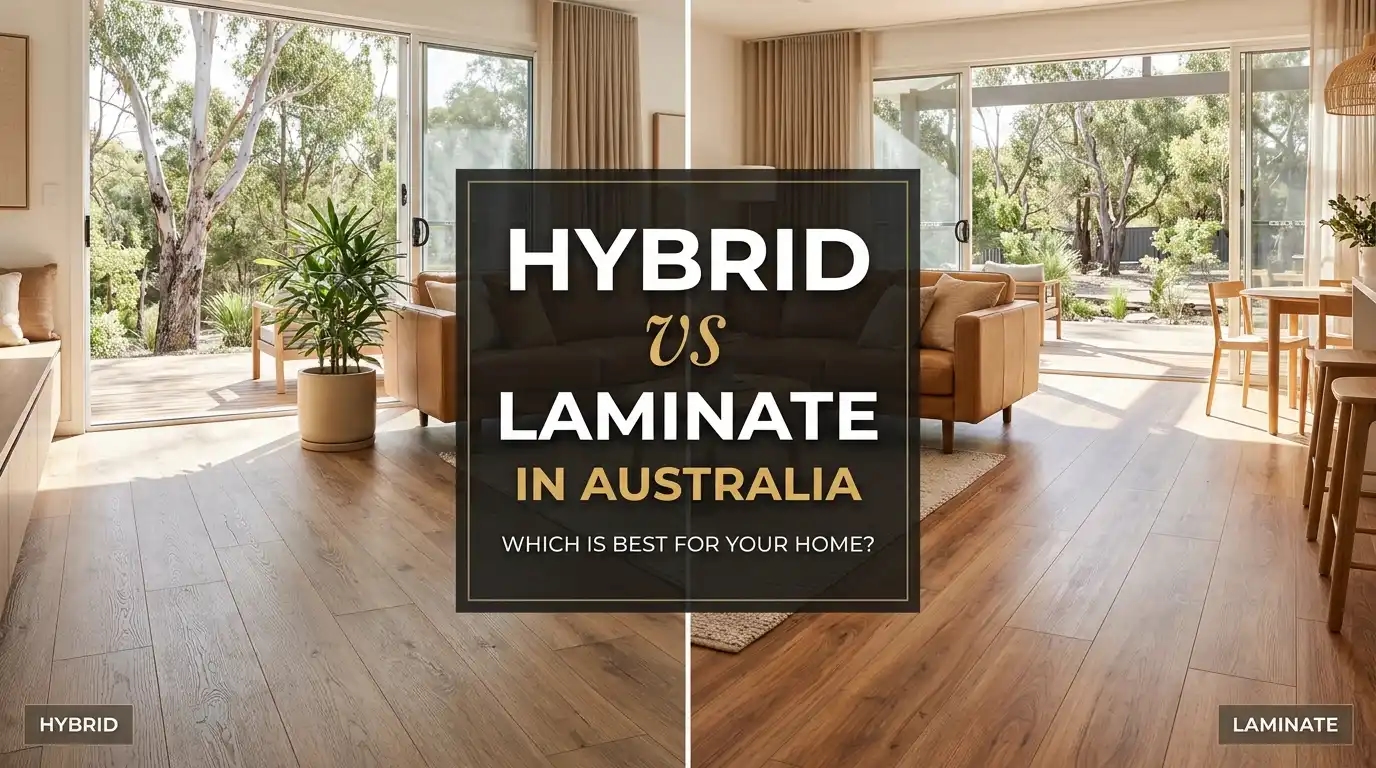
Choosing between hybrid flooring and laminate can make a significant difference to your home's durability, comfort, appearance and long-term maintenance. Both options offer attractive timber-look finishes and suit many Australian interiors, but they differ in construction, water resistance, surface protection and installation requirements. Hybrid flooring combines a rigid core with a decorative layer and protective wear layer, while laminate flooring uses a high-density fibreboard core topped with a photographic design layer and protective surface.
However, appearance alone does not tell you which flooring offers better value. Water exposure, AC abrasion ratings, household activity, installation conditions and the total supply-and-installation cost all influence your decision. In this guide, we compare hybrid flooring vs laminate in Australia for 2027, explain their waterproofing capabilities, clarify what AC ratings mean, and examine their costs, benefits and limitations. You'll learn which option best suits different rooms, lifestyles and budgets before investing in new flooring.
In this blog
- What Is the Difference Between Hybrid Flooring and Laminate?
- Is Hybrid Flooring More Waterproof Than Laminate?
- What Do AC Ratings Mean for Laminate and Hybrid Flooring?
- Which Flooring Is More Durable: Hybrid or Laminate?
- How Much Does Hybrid Flooring Cost Compared With Laminate in Australia in 2027?
- Which Flooring Is Better for Different Rooms in an Australian Home?
- How Do Hybrid and Laminate Flooring Compare in Installation and Maintenance?
- Should You Choose Hybrid Flooring or Laminate?
- Conclusion
- Frequently Asked Questions
What Is the Difference Between Hybrid Flooring and Laminate?
Hybrid flooring and laminate flooring are both multi-layered products designed to replicate the appearance of natural timber, but their core materials create important differences. Hybrid flooring generally uses a rigid SPC or WPC composite core, while laminate flooring typically uses a high-density fibreboard (HDF) core made from compressed wood fibres. This difference affects how each floor responds to moisture, temperature changes, impact and everyday use.
Explore Our Hybrid FlooringBoth products usually feature a decorative layer, a protective surface and a click-lock installation system. However, their construction is not identical across every brand. Some hybrid products include attached acoustic underlay, while others require a separate underlay. Laminate products also vary in core density, surface protection and moisture-resistant features. Understanding these layers helps you compare the actual product specifications rather than relying on the flooring category alone.
Explore Our Laminate FlooringWhat Is Hybrid Flooring and How Is It Made?
Hybrid flooring is a multi-layered rigid-core flooring product that combines a timber-look decorative surface with a composite core. Most hybrid flooring sold in Australia uses Stone Plastic Composite (SPC), although some ranges use Wood Plastic Composite (WPC) or other rigid-core materials.
A typical hybrid plank contains the following layers:
Protective coating: The top coating, often UV-cured, helps protect the surface finish and makes routine cleaning easier.
Wear layer: This transparent layer protects the decorative film against everyday abrasion, scuffs and surface wear. Its thickness is commonly measured in millimetres.
Decorative film: A printed image creates the timber or stone appearance. Manufacturers use different colours, patterns and textures to reproduce natural materials.
Rigid composite core: The SPC or WPC core provides the plank's structure, rigidity and dimensional characteristics.
Attached underlay: Some hybrid planks include an acoustic backing, such as IXPE foam, bonded to the underside. Other products may require a separate underlay, depending on their design and installation instructions.
SPC hybrid flooring uses a dense core made primarily from limestone powder and PVC. This mineral-based construction does not absorb water like a wood-fibre core, making SPC flooring highly resistant to moisture-related swelling. WPC hybrid flooring uses a wood-plastic composite core, which generally has a different density and underfoot feel.
The combination of a rigid core, decorative film and protective surface gives hybrid flooring its timber-like appearance without using solid timber throughout the plank. However, the performance of each product still depends on its wear layer, core formulation, locking system and installation quality.
What Is Laminate Flooring and How Is It Constructed?
Laminate flooring is an engineered flooring product made by combining a protective surface, a decorative image and a compressed wood-fibre core. Most conventional laminate planks use high-density fibreboard (HDF), which gives the board its strength and structural stability.
A typical laminate plank contains four main layers:
Protective overlay: The transparent top layer protects the decorative surface against abrasion, scratches and everyday wear. Some products use additional surface treatments to improve stain and impact resistance.
Decorative layer: A printed image reproduces the appearance of timber, stone or other materials. This layer determines the plank's colour, pattern and visual finish.
HDF core: The main structural layer consists of compressed wood fibres bonded with resin. It provides rigidity and supports the click-lock joints along the plank edges.
Backing layer: The bottom layer helps balance the board and protect its underside. Its construction varies between manufacturers and product ranges.
The HDF core is the most important difference between conventional laminate and hybrid flooring. Because HDF contains wood fibres, it can absorb moisture when water reaches the core through exposed edges or joints. Prolonged exposure can cause the board to swell, distort or lose its original shape.
Some modern laminate products include water-resistant treatments, sealed edges or improved joint systems. These features can help reduce moisture penetration, but they do not automatically make every laminate product waterproof. Always check the manufacturer's water-resistance claims, approved installation areas and maintenance requirements.
How Do SPC, WPC and HDF Cores Differ?
SPC, WPC and HDF cores differ mainly in their composition, density and response to moisture. SPC uses a mineral-and-plastic composite, WPC uses a wood-plastic composite, and HDF uses compressed wood fibres. These materials influence how each flooring product feels, responds to environmental conditions and performs in everyday settings.
SPC flooring generally provides a denser and firmer structure than WPC flooring. Its mineral-based core offers strong resistance to moisture-related swelling, making it a common choice for hybrid flooring ranges designed for areas where spills may occur. However, its rigid construction also makes proper subfloor preparation important.
WPC flooring generally offers a slightly softer and more cushioned feel underfoot. Its wood-plastic composition differs from SPC, although the exact balance of materials varies between manufacturers. Buyers should compare the technical specifications rather than assume that every WPC product offers the same performance.
HDF provides the structural foundation for conventional laminate flooring. Its compressed wood-fibre construction creates a strong board, but the material remains vulnerable to moisture exposure. Water entering through joints, damaged edges or unprotected areas can cause the core to expand.
The key distinction is that SPC and WPC use composite cores, while HDF uses wood fibres. This makes hybrid flooring generally more suitable for environments where moisture exposure is a concern, while laminate flooring remains a practical option for many dry indoor areas.
Are Hybrid and Laminate Flooring Both Floating Floors?
Yes. Most hybrid and laminate flooring products use a floating installation system, where individual planks connect through click-lock joints rather than being permanently fixed to the subfloor. The connected planks form a continuous flooring surface that sits over an appropriately prepared base.
During installation, the installer joins each plank to the next using the manufacturer's locking mechanism. The flooring is not normally glued or nailed directly to the subfloor. Instead, the installation system allows the connected floor to accommodate the movement specified by the manufacturer.
However, floating installation does not mean the subfloor preparation is less important. Both hybrid and laminate flooring require a suitable base that meets the product's requirements for flatness, cleanliness, dryness and structural stability. Uneven surfaces can place stress on the locking joints, create movement underfoot and affect the finished appearance.
There are also differences in underlay requirements:
Hybrid flooring: Many products include an attached acoustic underlay. If the plank already has an integrated backing, adding another underlay may be prohibited unless the manufacturer specifically approves it.
Laminate flooring: Many products require a separate underlay to provide acoustic insulation, cushioning and a suitable installation base. Some ranges have an integrated backing instead.
Installers must also follow the manufacturer's requirements for expansion gaps, room dimensions, transitions between flooring areas and installation over existing substrates. These details can vary between product ranges, even when two floors use similar click-lock systems.
For Gorkha Flooring, correct installation starts with assessing the existing subfloor and selecting a flooring system that suits the site conditions. Following the product-specific installation instructions helps protect the locking joints and supports the long-term performance of the finished floor.
Is Hybrid Flooring More Waterproof Than Laminate?
SPC hybrid flooring has a water-resistant, non-absorbent mineral-and-plastic core that does not swell like conventional HDF laminate when exposed to water. This makes it a strong option for homes where accidental spills and occasional surface moisture are common. However, the term waterproof needs to be understood in the context of the complete flooring product, not just its core.
SPC cores primarily contain limestone powder and PVC, so water does not penetrate the core in the same way it can enter wood-fibre boards. WPC hybrid flooring also uses a composite core, but its wood-plastic formulation differs between manufacturers. Buyers should check the technical specifications and water-resistance claims of the exact product rather than assume every hybrid floor offers identical protection.
More importantly, a waterproof core does not make the entire flooring installation a waterproof membrane. Water may still pass through plank joints, expansion gaps or unsealed edges and reach the subfloor. Moisture rising from a concrete slab can also affect the installation if the subfloor has not been properly tested and prepared.
Why Can Water Damage Laminate Flooring?
Conventional laminate flooring can suffer water damage because its HDF core contains compressed wood fibres that absorb moisture. When water enters through plank joints, exposed edges or damaged surface areas, the fibres can swell. This expansion may cause raised edges, lifting, distorted boards or separation between planks.
The protective overlay on laminate flooring helps resist everyday surface wear and spills, but it does not necessarily prevent water from reaching the core. The locking joints also create potential entry points, particularly when water remains on the surface for an extended period or repeatedly reaches the same areas.
Common signs of moisture damage include:
Swollen edges: The plank edges expand as the HDF core absorbs moisture.
Raised joints: Adjacent boards may develop noticeable ridges or uneven edges.
Lifting or buckling: Moisture-related expansion can affect the position and shape of the boards.
Surface deterioration: Prolonged exposure can damage the decorative layer and protective finish.
Permanent distortion: Boards may not return to their original shape after drying.
Modern water-resistant laminate products can reduce these risks through treated cores, sealed edges and improved locking systems. However, conventional laminate and enhanced water-resistant laminate should not be treated as the same product. Always check the manufacturer's permitted exposure time, cleaning instructions and warranty conditions.
Can Hybrid Flooring Be Installed in Kitchens, Bathrooms and Laundries?
Hybrid flooring is commonly considered for kitchens and other areas where occasional spills may occur, but bathroom and laundry installations require closer attention. A waterproof core alone does not establish that a flooring product is approved for every wet area under Australian building and installation requirements.
Kitchens: Hybrid flooring can be a practical option for kitchens because its rigid composite core resists moisture-related swelling. Everyday spills from cooking, washing and cleaning are less likely to damage an SPC core than a conventional HDF core. However, water should still be wiped up promptly, and the installer must follow the manufacturer's requirements around cabinetry, appliances, edges and expansion gaps.
Bathrooms: Bathroom suitability depends on the exact product and its certification. A bathroom may have regular water exposure, plumbing penetrations, floor wastes and specific waterproofing requirements. Some hybrid products are approved for limited bathroom applications, while others explicitly exclude wet areas from their installation guidelines.
Laundries: Hybrid flooring may suit a laundry where the manufacturer permits installation and the floor is protected against water penetration at the perimeter and other vulnerable points. However, some manufacturers exclude laundries from their approved applications, so checking the product warranty and installation guide is essential.
Before selecting hybrid flooring for any wet area, confirm:
Whether the manufacturer approves the product for the intended room.
Whether the product has relevant certification for that specific application.
How the perimeter expansion gaps and plank joints must be treated.
Whether the existing subfloor and waterproofing system meet applicable requirements.
Whether the warranty covers the proposed installation conditions.
Hybrid flooring should never replace the waterproofing system required beneath a wet-area floor. The flooring product and the building's waterproofing system serve different purposes.
Is Water-Resistant Laminate a Good Alternative to Hybrid Flooring?
Water-resistant laminate can be a suitable alternative to hybrid flooring when you want the appearance and surface protection of laminate with improved resistance to everyday spills. Manufacturers achieve this through treatments such as moisture-resistant HDF cores, sealed plank edges and specially designed locking joints.
These improvements can give water-resistant laminate more protection than conventional laminate. Some products are tested to withstand surface spills for a stated period, such as 24, 48 or 72 hours. However, these claims apply to specific products and testing conditions. They do not mean that every water-resistant laminate can withstand flooding, prolonged water exposure or installation in wet areas.
The main difference between waterproof flooring options is that water-resistant laminate still uses a wood-fibre-based core in many product ranges, while SPC hybrid flooring uses a mineral-and-plastic composite core. Enhanced treatments can slow moisture penetration into laminate, but they do not automatically eliminate the possibility of swelling if water reaches the core.
Choose water-resistant laminate if its appearance, surface rating and price suit your needs and the installation area is not exposed to frequent moisture. Choose SPC hybrid flooring when resistance to moisture-related core swelling is a higher priority. Neither option should be selected for a wet area without checking the manufacturer's approved applications.
What Happens When Water Gets Between Flooring Planks?
When water gets between flooring planks, the outcome depends on the core material, joint design, installation details and how quickly the moisture is removed. SPC hybrid flooring generally handles this exposure better than conventional laminate because its core does not absorb water like HDF. However, water that reaches the subfloor can still cause damage beneath either flooring system.
Several parts of a floating floor installation can allow moisture to enter:
Plank joints: Click-lock joints connect individual boards, but their resistance to water depends on the locking profile and product design. Water may penetrate through joints that are not designed or certified to prevent moisture ingress.
Perimeter gaps: Floating floors require expansion spaces around walls and fixed objects. If water reaches these openings, it may travel beneath the flooring.
Expansion spaces and transitions: Doorways, floor transitions and other installation points can create additional routes for water to reach the subfloor if they are not detailed correctly.
Subfloor moisture: Moisture rising from a concrete slab or entering through an underlying leak can affect the flooring from below. A waterproof SPC core does not eliminate the need for appropriate subfloor moisture testing and preparation.
The difference becomes clearer when water remains beneath the planks. Conventional laminate may absorb moisture and develop swollen edges or distorted boards. SPC hybrid flooring is less vulnerable to this type of core damage, but trapped water can still affect the subfloor, underlay, adhesives in surrounding materials and other parts of the building.
For this reason, installers should address the source of moisture before replacing damaged flooring. They may need to lift affected planks, inspect the subfloor, check moisture levels and allow the area to dry before reinstalling the floor or fitting replacement boards.
The practical takeaway: Hybrid flooring offers better resistance to moisture-related core damage, but no floating floor should be treated as a substitute for proper leak prevention, subfloor preparation or wet-area waterproofing. The best protection comes from choosing an approved product and installing it according to the manufacturer's instructions.
Ready to Transform Your Home's Flooring?
Get expert guidance on carpets, hybrid, timber, vinyl & laminate flooring. Book a free in-home consultation with our specialists today!
What Do AC Ratings Mean for Laminate and Hybrid Flooring?
AC ratings classify the abrasion resistance of laminate flooring surfaces. The system uses a standardised abrasion test to measure how well the protective surface withstands repeated friction before the decorative layer shows wear. A higher AC rating indicates greater resistance to abrasion under the test conditions.
The European EN 13329 standard provides the testing and classification framework for laminate flooring. Although AC1 to AC5 are commonly discussed in flooring specifications, the modern classification framework also includes AC6 for very heavy commercial applications.
The commonly recognised AC ratings are:
These categories help buyers understand the intended use of a laminate product, but the AC rating measures abrasion resistance rather than every aspect of flooring durability. It does not independently establish water resistance, impact resistance, scratch resistance, dimensional stability or resistance to heavy furniture.
Another important detail is the relationship between AC ratings and usage classifications. EN 13329 also associates abrasion classes with broader use classes, such as 21, 22, 23 and 31 to 34. These classifications consider additional performance requirements rather than abrasion alone.
When comparing laminate products, check the manufacturer's technical data sheet for the stated AC rating, applicable product classification and supporting test information. A product label without clear technical documentation provides less confidence than a verifiable test classification.
Is AC4 or AC5 Laminate Better for Australian Homes?
AC4 and AC5 laminate flooring both offer strong abrasion resistance, but understanding the AC rating on laminate flooring helps homeowners choose the right level of surface protection. Most Australian homes do not automatically need the higher AC5 classification. AC4 can provide suitable protection for busy households, while AC5 is generally intended for more demanding commercial environments.
Your household's activity level matters more than choosing the highest available number. A home with children, pets, frequent visitors and busy hallways experiences more daily surface contact than a spare bedroom or low-traffic apartment.
Consider these situations:
Bedrooms: AC2 or AC3 may provide sufficient abrasion resistance for rooms with relatively light foot traffic.
Living rooms: AC3 or AC4 can suit everyday household activity, depending on the product and expected use.
Hallways and entry areas: AC3 or AC4 may be worth considering because these areas experience repeated foot traffic and dirt carried in from outdoors.
Homes with pets: AC4 can be a practical option for households with active pets, but buyers should also examine scratch resistance and the manufacturer's surface-performance information.
Commercial interiors: AC4 or AC5 may be appropriate depending on customer traffic, furniture movement and the intended commercial application.
AC5 is not automatically a better value for every household. A higher abrasion rating does not guarantee a more scratch-resistant, waterproof or impact-resistant floor. For example, a laminate product with an AC5 classification can still suffer moisture damage if water penetrates its HDF core.
For most residential projects, AC3 or AC4 laminate can be a sensible starting point. Compare the product's complete specifications, warranty conditions and price before paying extra for AC5. The best choice balances expected foot traffic with the performance characteristics you actually need.
Do Hybrid Floors Have an AC Rating?
Hybrid flooring generally does not use the same AC classification system as laminate flooring. Manufacturers usually describe hybrid products through specifications such as wear-layer thickness, surface coating, core construction, slip resistance and product-specific performance tests.
The AC system was developed for classifying laminate flooring abrasion resistance under the relevant testing framework. Hybrid flooring uses a different construction, often with an SPC or WPC core and a transparent wear layer above the decorative film. Therefore, assigning an AC rating to a hybrid product without an applicable test and classification would create a misleading comparison.
Instead, hybrid flooring specifications commonly include:
Wear-layer thickness: The measured thickness of the transparent protective layer, usually stated in millimetres.
Surface coating: Treatments such as UV coatings that help protect the finish and support routine maintenance.
Core construction: Whether the product uses SPC, WPC or another rigid-core formulation.
Slip resistance: Product-specific results from relevant slip-resistance tests.
Dimensional stability: Information about how the flooring responds to temperature and environmental changes.
Warranty: The manufacturer's stated coverage for residential or commercial use, subject to its conditions.
These specifications describe different performance characteristics. A thicker wear layer does not automatically mean better slip resistance, greater impact resistance or superior dimensional stability.
When comparing hybrid flooring, request the manufacturer's technical data sheet and check which tests support its performance claims. This gives you a more reliable basis for comparing products than trying to translate hybrid specifications into laminate AC ratings.
What Does Hybrid Flooring Wear-Layer Thickness Mean?
Hybrid flooring wear-layer thickness refers to the thickness of the transparent protective layer above the decorative film. Manufacturers commonly express this measurement in millimetres, with examples including 0.3 mm and 0.5 mm. The wear layer helps protect the printed design against everyday abrasion and surface wear.
A thicker wear layer can provide more protective material above the decorative film, but thickness alone does not determine the complete performance of a hybrid floor. The formulation, surface coating, manufacturing quality and test results also influence how the product performs.
For example, a 0.5 mm wear layer is thicker than a 0.3 mm wear layer, but this does not establish that the first product is twice as durable. It also does not mean that the product will automatically resist scratches, dents or stains better in every situation.
When comparing hybrid flooring specifications, examine the following details:
Wear-layer thickness: Check whether the manufacturer specifies 0.3 mm, 0.5 mm or another measurement.
Protective coating: Identify whether the surface includes a UV-cured finish or another protective treatment.
Abrasion test results: Check whether the manufacturer provides test results using a recognised method.
Scratch and stain resistance: Look for separate test information rather than assuming these properties from wear-layer thickness.
Warranty coverage: Review the residential and commercial warranty terms, including exclusions and maintenance requirements.
The intended installation area also matters. A hybrid floor in a spare bedroom may not require the same surface specification as one in a busy family living room or commercial interior. Matching the product's documented performance to the expected traffic helps you avoid paying for specifications you may not need.
Can You Compare AC Ratings With a 0.3 mm or 0.5 mm Hybrid Wear Layer?
No. AC ratings and hybrid flooring wear-layer thickness measure different characteristics, so they cannot be directly compared as equivalent performance scores. An AC4 laminate rating does not mean the product is more durable than a hybrid floor with a 0.5 mm wear layer, and a 0.5 mm hybrid wear layer does not correspond to any particular AC classification.
The distinction is straightforward:
AC rating: Classifies the abrasion resistance of a laminate flooring surface under a standardised test.
Wear-layer thickness: Measures the physical thickness of the transparent protective layer on a hybrid flooring product.
For example, AC4 describes a laminate product's abrasion classification, while 0.3 mm describes the thickness of a hybrid floor's wear layer. Neither measurement independently establishes the product's complete durability or suitability for a particular room.
Instead of comparing these numbers directly, assess each flooring product using relevant performance information.
This approach gives you a more meaningful comparison because it considers how each flooring system performs rather than relying on unrelated numbers.
For Australian homeowners, the practical decision should reflect the room's traffic, moisture exposure, pets, children and cleaning requirements. A well-specified AC4 laminate may suit a busy dry living area, while an SPC hybrid floor with a suitable wear layer may be a better option where moisture resistance is a priority.
Which Flooring Is More Durable: Hybrid or Laminate?
Neither hybrid nor laminate flooring always offers better scratch resistance. Laminate flooring uses a protective overlay designed to resist surface abrasion, while hybrid flooring uses a transparent wear layer and protective coating to protect its decorative film. The actual performance depends on the materials, surface treatments and testing of each product.
Laminate flooring with a suitable AC classification can provide strong resistance to repeated surface friction. However, an AC rating does not guarantee that the floor will resist every type of scratch. Sharp objects, dragged furniture, grit and pet claws can still damage the surface.
Hybrid flooring also varies between product ranges. A product with a 0.5 mm wear layer may offer more protective material than one with a 0.3 mm layer, but thickness alone does not establish scratch resistance. The coating formulation and independent test results also matter.
For households with pets or children, examine the manufacturer's scratch-resistance claims and maintenance instructions. Use entrance mats to reduce grit, fit protective pads beneath furniture and avoid dragging heavy objects across either flooring type.
Which Flooring Handles Dents, Impact and Heavy Furniture Better?
Hybrid and laminate flooring respond differently to impact because their core materials and board constructions are different. SPC hybrid flooring has a dense, rigid composite core, while laminate flooring generally uses an HDF core. However, neither construction guarantees that a plank will resist dents or impact damage under every condition.
SPC flooring has a firm structure that supports everyday residential use, but heavy or sharp objects can still damage its surface or locking edges. Its rigidity also makes proper subfloor preparation important. Uneven areas can create pressure points beneath the planks and place stress on the joints.
Laminate flooring also offers a rigid board structure, with its resistance to impact influenced by HDF density, board construction and surface design. Some products provide specific impact-resistance test results that help buyers assess their performance.
Furniture protection is important for both flooring types. Consider these precautions:
Use furniture pads: Attach suitable felt or protective pads beneath chairs, tables and other movable furniture.
Protect heavy furniture: Use appropriate load-distribution pads beneath heavy cabinets and appliances where permitted by the flooring manufacturer.
Avoid dragging objects: Lift furniture when moving it to reduce scratches, dents and damage to click-lock joints.
Use suitable castors: Check the manufacturer's requirements for office chairs and furniture with wheels.
Prepare the subfloor: Ensure the installation surface meets the required flatness and stability specifications.
When comparing products, look for documented impact-resistance results rather than assuming that a thicker or denser plank will always perform better.
Which Flooring Is Better for Homes With Pets and Children?
Hybrid flooring can be a practical choice for homes with pets and children because its composite core offers strong resistance to moisture-related swelling. However, laminate flooring can also perform well in busy households when it has a suitable abrasion classification and appropriate surface protection.
Everyday family activity creates several flooring challenges. Children may spill drinks, drop toys and move furniture, while pets can bring dirt indoors, leave water around feeding bowls and scratch surfaces with their claws.
For households with young children or pets, hybrid flooring may provide an advantage where accidental spills are frequent. Its SPC core is less vulnerable to moisture-related swelling than conventional laminate. However, the protective surface still needs to resist the scratches and scuffs associated with everyday activity.
Laminate flooring remains a reasonable option for families who prioritise surface abrasion resistance and install it in areas with controlled moisture exposure. An appropriate AC classification can help buyers assess its suitability for residential traffic.
The best choice depends on your household's main concerns. If moisture exposure is the priority, consider SPC hybrid flooring. If you are choosing laminate, examine its AC classification, surface protection and water-resistance features. For both options, regular cleaning, entrance mats and furniture protection help maintain the finished floor.
How Do Flooring Thickness and Wear Layers Affect Durability?
Total board thickness, core thickness, wear-layer thickness and attached underlay describe different parts of a flooring product. These measurements should not be treated as interchangeable indicators of durability. Each specification serves a different purpose and contributes to the flooring system in a different way.
Total board thickness measures the overall thickness of the flooring plank, although manufacturers may state whether attached underlay is included separately. A thicker plank does not automatically provide better scratch or impact resistance.
Core thickness refers to the thickness of the main structural layer. In hybrid flooring, this is usually the SPC or WPC composite core. In laminate flooring, it refers to the HDF or other wood-fibre core. Core construction influences rigidity, dimensional behaviour and the strength of the locking profile.
Wear-layer thickness measures the transparent protective layer above the decorative film in hybrid flooring. Manufacturers commonly specify this measurement in millimetres. A thicker wear layer provides more protective material, but its performance also depends on the coating formulation and product testing.
Attached underlay is the acoustic or cushioning layer fitted to the underside of some flooring products. Materials such as IXPE or EVA can help reduce impact noise and provide a suitable backing where the manufacturer permits their use. Underlay does not replace the wear layer or determine the floor's scratch resistance.
Consider this example from an Australian SPC hybrid product specification:
These measurements illustrate why buyers should examine the complete construction. A 7 mm hybrid product does not necessarily have a 7 mm rigid core, and a 0.5 mm wear layer does not describe the plank's total thickness.
For laminate flooring, the same principle applies. A 12 mm laminate plank is not automatically more scratch-resistant than an 8 mm product. The protective overlay, HDF density, locking profile and documented performance tests provide more useful information about its durability.
When comparing flooring, ask for the technical data sheet and identify each layer separately. This helps you avoid paying extra for thickness that does not address your actual performance requirements.
How Long Do Hybrid and Laminate Floors Last?
Both hybrid and laminate flooring can provide many years of residential use when homeowners select suitable products, prepare the subfloor correctly and follow the manufacturer's maintenance instructions. However, there is no single service-life figure that applies to every flooring product.
The actual lifespan depends on several factors:
Product construction: Core quality, surface protection, locking-system design and manufacturing standards influence long-term performance.
Foot traffic: Busy hallways, entry areas and family rooms generally experience more wear than spare bedrooms.
Moisture exposure: Conventional laminate can suffer swelling when water reaches its HDF core, while hybrid flooring is less vulnerable to this type of damage.
Installation quality: An uneven or poorly prepared subfloor can place stress on the locking joints and affect floor stability.
Maintenance: Suitable cleaning products, prompt spill removal and protective furniture pads help reduce preventable damage.
Environmental conditions: Temperature changes, direct sunlight and subfloor moisture can affect flooring performance when installation requirements are not followed.
Manufacturer warranties provide another useful point of comparison, but they should not be confused with guaranteed service life. A residential warranty may cover specific manufacturing defects or wear conditions for a stated period, subject to installation, maintenance and usage requirements.
Laminate warranties also vary between manufacturers and product ranges. Some cover residential use for extended periods, while others provide shorter coverage depending on the product's construction and intended application.
Before purchasing either flooring type, check:
The residential and commercial warranty periods.
Whether the warranty covers surface wear, fading, staining or structural defects.
Any exclusions relating to moisture, pets, furniture or improper maintenance.
Whether professional installation is required for warranty coverage.
The manufacturer's cleaning and maintenance requirements.
A longer warranty can provide additional reassurance, but it does not guarantee that the flooring will remain damage-free for the entire period. The best long-term investment is a product whose construction, performance specifications and warranty conditions match the demands of your home.
Ready to Transform Your Home's Flooring?
Get expert guidance on carpets, hybrid, timber, vinyl & laminate flooring. Book a free in-home consultation with our specialists today!
How Much Does Hybrid Flooring Cost Compared With Laminate in Australia in 2027?
Hybrid flooring typically costs around 30-90 per m² for supply only in Australia, depending on the product range, core construction, wear-layer thickness and brand. Professional installation adds approximately 25-45 per m² for a straightforward floating-floor installation. Premium products, complex layouts and additional preparation can increase the total.
The following table provides indicative Australian price ranges for budgeting:
These estimates reflect published Australian pricing guides and supplier listings available in 2026. Actual quotes can vary by state, supplier and installation conditions.
Several product features influence hybrid flooring prices:
Core construction: SPC and WPC products can have different manufacturing costs and underfoot characteristics.
Wear-layer thickness: Products with thicker wear layers may cost more, although thickness alone does not establish overall quality.
Total thickness: Thicker boards, integrated underlay and specialised locking systems can affect the price.
Surface finish: Embossed textures, realistic timber patterns and premium finishes can increase product costs.
Brand and warranty: Established brands and products with specific performance certifications or longer warranty coverage may sit in higher price categories.
How Much Does Laminate Flooring Cost Per Square Metre?
Laminate flooring typically costs around 15-70 per m² for supply only in Australia. Budget products generally sit at the lower end, while premium laminate with higher abrasion classifications, thicker boards and enhanced water-resistant treatments can cost more. Standard floating-floor installation usually adds another 25-45 per m².
The following table provides indicative price categories:
These installed ranges are planning estimates, not guaranteed supplier rates. They assume a relatively straightforward installation and may exclude removal, major subfloor preparation and additional finishing work.
Several specifications influence laminate flooring prices:
Board thickness: Laminate products commonly come in different thicknesses, including 8 mm, 10 mm and 12 mm. Thicker construction may affect material costs, but does not automatically indicate better surface durability.
AC classification: Products with higher abrasion classifications, such as AC4 or AC5, may cost more because of their intended performance and construction.
Surface finish: Textured finishes, embossed patterns and more realistic timber designs can increase the price.
Moisture protection: Water-resistant treatments, sealed edges and improved locking systems may place certain laminate products in higher price categories.
Brand and warranty: Product reputation, manufacturing standards and warranty coverage can influence retail pricing.
Is Hybrid Flooring More Expensive Than Laminate?
Yes. Hybrid flooring generally costs more than conventional laminate flooring, particularly when comparing budget and mid-range products with similar installation requirements. However, the price difference is not fixed. Premium water-resistant laminate can overlap with entry-level and mid-range hybrid products.
Consider the following indicative comparison:
The additional cost of hybrid flooring may be worthwhile when moisture resistance is a priority. Its SPC core resists moisture-related swelling, making it a practical option for kitchens and other manufacturer-approved areas where accidental spills are more common.
Laminate flooring can offer better value when the installation area remains relatively dry and you want a timber-look surface with suitable abrasion resistance. A well-specified AC-rated laminate may provide the performance your household needs without paying extra for moisture resistance that you may not require.
However, buyers should avoid comparing the cheapest laminate with the most expensive hybrid flooring. Compare similar product tiers, surface specifications, warranties and installation inclusions to understand the actual price difference.
What Additional Costs Affect Flooring Installation?
The flooring material and standard installation labour are only part of the total project cost. Subfloor preparation, old-floor removal, moisture testing, underlay, trims and finishing work can increase the final invoice. These costs depend on the condition of the property and the installation requirements of the selected product.
Common additional expenses include:
Subfloor preparation: The installer must assess the existing concrete or timber base before laying either flooring type. Grinding, patching or applying levelling compound may be necessary if the surface does not meet the manufacturer's flatness requirements.
Moisture testing: Concrete slabs require appropriate moisture assessment before installation. A waterproof hybrid core does not eliminate the need to check moisture conditions beneath the floor.
Old-floor removal: Existing carpet, laminate, vinyl or other flooring may need to be removed before installation. The cost depends on the material, removal method, adhesive and disposal requirements.
Underlay: Some hybrid products include attached acoustic underlay, while others require a separate approved system. Laminate products may also require separate underlay. Check the manufacturer's instructions before purchasing additional material.
Trims and skirting: Installers may use scotia, transition strips or refitted skirting boards to complete the edges. The final cost depends on the number of doorways, room boundaries and existing skirting condition.
Wastage and delivery: Flooring is generally purchased in complete cartons, so the required quantity may exceed the measured floor area. Cutting requirements, room shapes, plank direction and installation patterns influence the amount of additional material. Delivery costs also depend on the supplier, location and order size.
When requesting a quote, ask for an itemised breakdown. This helps you identify whether the advertised price includes GST, underlay, installation, wastage, delivery and finishing work.
Which Flooring Offers Better Long-Term Value?
Hybrid flooring may offer better long-term value in areas where moisture exposure is a regular concern, while laminate flooring can provide better upfront value in dry residential spaces. The right investment depends on the initial price, expected use, maintenance requirements and the cost of potential repairs or replacement.
Consider five factors before making your decision:
1. Initial purchase and installation cost
Laminate generally has a lower starting price, particularly in budget and mid-range categories. Hybrid flooring often requires a higher initial investment, although the difference varies between suppliers and product specifications.
2. Moisture exposure
SPC hybrid flooring offers an advantage where accidental spills and surface moisture are common because its core does not swell like conventional HDF. Laminate flooring may require more careful moisture management, even when it includes enhanced water-resistant treatments.
3. Maintenance and cleaning
Both flooring types are relatively easy to maintain with regular sweeping, vacuuming and approved damp cleaning methods. Neither should be exposed to excessive water or unsuitable cleaning chemicals.
4. Repair and replacement requirements
Damage can affect either flooring type. Conventional laminate may require board replacement after moisture-related swelling, while hybrid flooring can still suffer surface scratches, dents or locking-joint damage. The availability of matching replacement planks and the original installation method can influence repair costs.
5. Warranty conditions
Compare the manufacturer's residential warranty, covered defects, installation requirements and exclusions. A longer warranty does not guarantee a longer service life, so examine what the manufacturer actually covers.
For a busy household with frequent spills, an appropriately specified SPC hybrid floor may justify its higher initial cost. For bedrooms, living rooms and other relatively dry areas, laminate can provide a more affordable timber-look flooring solution.
The best long-term value comes from matching the product's construction and performance specifications to the room rather than choosing the cheapest price or highest warranty period.
Also Read: Tiles Vs Hybrid FlooringWhich Flooring Is Better for Different Rooms in an Australian Home?
The best flooring choice depends on how each room is used, how much foot traffic it receives and how often it encounters moisture. Hybrid flooring generally suits areas where accidental spills and moisture resistance are important, while laminate flooring can offer an affordable and durable option for relatively dry rooms. However, product specifications, installation requirements and household preferences should guide the final decision.
Australian homes have different flooring demands across living rooms, bedrooms, kitchens, hallways and wet areas. Instead of installing the same product everywhere, consider the conditions in each room and select flooring that meets its practical requirements.
Is Hybrid or Laminate Better for Living Rooms?
Both hybrid and laminate flooring can work well in living rooms because they offer timber-look finishes, easy maintenance and durable surfaces for everyday household activity. Hybrid flooring provides better protection against moisture-related core swelling, while laminate can offer strong abrasion resistance at a lower initial cost.
Living rooms experience regular foot traffic, furniture movement, dropped objects and occasional spills. Families with children or pets may prefer SPC hybrid flooring because its core handles accidental moisture exposure better than conventional HDF laminate.
Laminate flooring is also a practical choice for living rooms that remain relatively dry. An appropriate AC3 or AC4 product can provide suitable abrasion resistance for everyday residential use. Its range of timber-look finishes can also complement different interior styles.
Consider these factors when choosing between them:
Appearance: Both products offer timber-inspired colours, textures and plank designs.
Furniture: Both require suitable furniture pads to reduce scratches and surface damage.
Spills: SPC hybrid flooring offers an advantage where accidental spills are common.
Foot traffic: Check the laminate AC rating or the hybrid product's available abrasion and surface-performance data.
Budget: Laminate generally offers a lower entry price, while hybrids may justify a higher initial investment where moisture resistance matters.
For a busy family living room, SPC hybrid flooring can be a sensible choice. For a relatively dry living area where upfront cost is a priority, a well-specified laminate product can provide good value.
Which Flooring Is Better for Bedrooms?
Hybrid and laminate flooring are both suitable for many bedrooms, where moisture exposure is usually lower than in kitchens or laundries. The better option depends on your priorities for appearance, comfort, sound, budget and maintenance.
Bedrooms generally experience less foot traffic than shared living areas. As a result, homeowners may not need the highest abrasion classification or thickest available wear layer for this space.
Laminate flooring can be an economical bedroom option because it provides a timber-look surface without the higher starting cost of many hybrid ranges. Hybrid flooring also works well in bedrooms, particularly when the product includes an attached acoustic underlay approved for the installation.
Consider the following differences:
Underfoot comfort: WPC hybrid products may feel more cushioned than rigid SPC flooring, while laminate comfort depends on board construction and the approved underlay.
Sound: Attached underlay or a compatible separate underlay can help reduce impact noise, although actual acoustic performance varies by product and subfloor.
Appearance: Both options provide a wide range of timber-look designs to suit modern and traditional bedrooms.
Budget: Laminate often offers a lower-cost starting point for rooms with limited moisture exposure.
Maintenance: Both are relatively easy to clean using manufacturer-approved methods.
For most bedrooms, laminate can be a cost-effective option when moisture is well controlled. Hybrid flooring is worth considering if you prefer its construction, acoustic features or greater resistance to accidental spills.
Is Hybrid Flooring Better for Kitchens and Dining Areas?
SPC hybrid flooring is generally a more practical option than conventional laminate for kitchens and dining areas because its core resists moisture-related swelling. These rooms experience food spills, drink spills and regular cleaning, making moisture resistance an important consideration.
Kitchens can expose flooring to water from sinks, dishwashers, refrigerators and everyday cooking activities. Dining areas also experience dropped food, spilled drinks and frequent chair movement.
Hybrid flooring can handle these conditions better than conventional HDF laminate, but the installed floor is not automatically waterproof. Water can still enter through joints, perimeter gaps and other vulnerable points. Spills should be cleaned promptly, and the manufacturer's installation requirements must be followed.
Laminate can still suit dining areas and kitchens when the specific product is approved for the intended application and provides appropriate water-resistance features. However, homeowners should check the manufacturer's spill-resistance claims and warranty exclusions before choosing it.
For these rooms, compare:
Core moisture resistance: SPC hybrid flooring has an advantage over conventional HDF laminate.
Surface protection: Check the hybrid wear layer or laminate AC classification and supporting product data.
Cleaning requirements: Both products require suitable cleaning methods and prompt spill removal.
Furniture movement: Use protective pads beneath dining chairs and tables.
Installation details: Follow the manufacturer's requirements around cabinets, appliances, edges and expansion gaps.
For kitchens and dining areas, SPC hybrid flooring is often the more practical starting point, especially in households where spills occur frequently.
Can Hybrid or Laminate Flooring Be Used in Bathrooms and Laundries?
Some hybrid flooring products are approved for specific bathroom or laundry applications, but neither product category should be assumed suitable for every wet area. The manufacturer's installation instructions, product certification and waterproofing requirements determine where each flooring product can be installed.
SPC hybrid flooring offers better core-level moisture resistance than conventional laminate. However, water can still pass through joints or perimeter gaps and reach the underlying structure. This makes the product's approved applications particularly important in rooms exposed to regular water.
Some Australian hybrid products carry certification for specified internal wet areas. For example, certain Godfrey Hirst hybrid ranges have CodeMark certification for defined applications. These approvals apply to the certified product and stated conditions, not every hybrid floor available in Australia.
Conventional laminate flooring is generally less suitable for bathrooms and other areas with frequent moisture exposure because its HDF core can swell when water penetrates the board. Some water-resistant laminate products offer improved spill protection, but this does not automatically make them suitable for wet-area installation.
Before choosing flooring for a bathroom or laundry, check:
Whether the manufacturer explicitly approves the product for that room.
Whether the product has relevant certification for the proposed application.
Whether the installation requires specific perimeter sealing or joint treatments.
Whether the subfloor and underlying waterproofing meet applicable requirements.
Whether the warranty covers the intended installation area.
Neither hybrid nor laminate flooring should replace the waterproofing system required for a wet area. Where a room has a shower recess, floor waste or regular water exposure, confirm the complete installation requirements before selecting a floating-floor product.
Which Flooring Is Better for Hallways and High-Traffic Areas?
The best flooring for hallways and other high-traffic areas depends on surface abrasion resistance, product construction and the amount of daily activity. AC3 or AC4 laminate can suit many residential hallways, while hybrid flooring should be assessed through its wear-layer thickness, surface coating and available abrasion-test results.
Hallways experience repeated foot traffic, footwear friction, dirt and movement between rooms. Entry areas can also collect sand and grit, which may gradually damage the protective surface of either flooring type.
Laminate flooring with a suitable AC classification provides a useful measure of abrasion resistance. AC4 can be a practical option for busy residential areas, although the highest available classification is not necessary for every home.
Hybrid flooring uses a different performance specification. Buyers should examine the wear-layer thickness, protective coating and manufacturer test data rather than trying to assign an AC rating to the product.
For hallways exposed to outdoor moisture or frequent spills, SPC hybrid flooring may offer a practical advantage. For relatively dry hallways, an appropriately classified laminate product can provide reliable surface performance.
Regardless of the product, entrance mats, regular sweeping and protective furniture pads help reduce unnecessary wear.
Which Flooring Is More Suitable for Rental Properties?
Laminate flooring can be a cost-effective choice for rental properties because it generally has a lower initial material cost and offers a range of products suitable for residential foot traffic. However, hybrid flooring may provide better value in rental properties where accidental spills and moisture exposure are more likely.
Landlords should consider the expected tenant use, cleaning requirements, replacement costs and condition of the property before choosing a flooring system.
Laminate flooring may suit bedrooms, living areas and other dry spaces where the landlord wants to control the initial renovation budget. An appropriate AC3 or AC4 product can provide suitable abrasion resistance for many residential rental settings.
Hybrid flooring may be worth the additional investment in kitchens, dining areas and other manufacturer-approved spaces where spills are more common. Its SPC core is less vulnerable to moisture-related swelling than conventional HDF laminate, which can reduce one potential cause of flooring damage.
Consider these factors when choosing flooring for a rental property:
Upfront budget: Laminate generally provides a lower-cost starting point, while hybrid flooring may require a higher initial investment.
Tenant activity: Both options should have surface specifications suitable for expected residential traffic.
Moisture exposure: SPC hybrid flooring offers an advantage in areas where accidental spills are common.
Cleaning: Both flooring types are relatively easy to maintain when tenants follow the manufacturer's care instructions.
Replacement practicality: Check product availability and keep spare cartons from the same flooring batch where possible, as matching discontinued designs can be difficult.
Warranty: Review whether the product warranty covers rental or investment properties and identify any relevant exclusions.
For landlords prioritising upfront affordability in dry rooms, laminate can be a sensible option. For properties where moisture exposure and ease of maintenance are bigger concerns, a suitable hybrid product may justify the higher initial cost.
The best approach is to match the flooring to the property's use rather than automatically choosing the cheapest product or installing the same material throughout every room.
Also Read: How To Install Laminate Flooring?How Do Hybrid and Laminate Flooring Compare in Installation and Maintenance?
Hybrid and laminate flooring both use floating click-lock installation systems, but their preparation and maintenance requirements depend on the product and the condition of the existing floor. A successful installation starts with a suitable subfloor, correct moisture control and the right underlay. After installation, regular cleaning and prompt repairs help protect the surface and locking joints.
The process begins with inspecting the room and existing floor. The installer checks the subfloor, measures the area, identifies uneven sections and assesses moisture levels. Any unsuitable floor covering or surface defect must be addressed before laying the new planks. During installation, the installer follows the manufacturer's instructions for expansion gaps, underlay, plank layout and click-lock connections. After installation, the floor needs suitable trims and finishing details, followed by routine care that matches the product's cleaning requirements.
Can Hybrid and Laminate Flooring Be Installed Over Existing Tiles or Concrete?
Both hybrid and laminate flooring can often be installed over existing tiles or concrete, provided the surface meets the product's requirements for flatness, stability, cleanliness and moisture. Neither flooring type should be installed directly over every existing surface without inspection and preparation.
Existing tiles: Securely bonded ceramic or porcelain tiles can provide a suitable base for some floating floors. However, loose tiles, damaged sections and deep grout lines may need repair or levelling. Large grout joints can create uneven support beneath the planks and affect the click-lock connections.
Concrete: A concrete slab must be sufficiently dry, clean, firm and level. The installer should assess moisture before installation because moisture from the slab can affect flooring performance, even when the hybrid planks have a waterproof core. Any cracks, raised sections or low areas may also require repair.
Carpet, soft underlay, loose floor coverings and existing floating floors are generally unsuitable substrates. These materials can move or compress under the new flooring and place stress on the locking system. Always check the installation guide for the selected product before deciding whether to remove the existing floor.
Does Hybrid Flooring Need Underlay Compared With Laminate?
Hybrid flooring may have an attached underlay, while many laminate products require a separate underlay. However, the correct choice depends on the product's construction and its manufacturer's installation requirements.
Hybrid flooring with attached underlay: Many rigid-core hybrid planks include an acoustic underlay bonded to the underside. This layer can help reduce impact sound and simplify installation. Adding another underlay is not automatically necessary and may be prohibited because excessive cushioning can place pressure on the click-lock joints.
Hybrid flooring without attached underlay: Some products require a separate layer or a specified moisture-control system. The installer must use only an approved underlay that suits the product and subfloor.
Laminate flooring: Many laminate products use a separate underlay to provide acoustic support and help accommodate minor surface variations within the manufacturer's limits. Some products have a pre-attached underlay, so an additional layer may not be required.
Concrete subfloors may also need a specified moisture barrier. An acoustic underlay and a moisture barrier perform different functions, so one should not be treated as a replacement for the other. Check the product instructions before purchasing either material.
How Do You Prepare a Subfloor for Hybrid or Laminate Flooring?
Proper subfloor preparation involves inspecting the existing surface, correcting uneven areas, checking moisture and removing unsuitable materials. This work helps prevent movement, noise, joint separation and premature flooring damage.
A typical preparation process includes four steps:
Inspect the existing surface: Check for loose tiles, moving floorboards, cracks, damaged sections, old adhesive and other defects. The subfloor must provide firm and stable support.
Check flatness: Use a suitable straightedge to identify raised and depressed areas. Grind or sand high spots and fill low areas with an appropriate levelling compound. Follow the selected flooring's stated flatness tolerance rather than applying one measurement to every product.
Assess moisture: Test concrete and timber subfloors using an appropriate method. If readings exceed the manufacturer's limits, identify and address the moisture source or install an approved moisture-control system where permitted.
Clean and clear the surface: Remove dust, loose materials, carpet, unsuitable underlay and other contaminants. The finished surface must be clean and ready for installation.
Old flooring materials need special care during removal. Some older resilient floor coverings or adhesives may contain asbestos. If asbestos is suspected, do not sand, scrape or remove the material yourself. Arrange an appropriate assessment before work begins.
How Do You Clean and Maintain Hybrid and Laminate Floors?
Both hybrid and laminate floors are relatively easy to maintain with regular sweeping or vacuuming and careful damp cleaning. However, neither should be exposed to unnecessary standing water, and cleaning products should match the manufacturer's recommendations.
A waterproof hybrid core does not make the entire installed floor waterproof. Water can still reach the subfloor through joints, edges or gaps. Laminate flooring needs particular care because moisture entering the HDF core can cause swelling or damage.
Use furniture pads to reduce scratches, place suitable mats near entrances to catch grit, and lift heavy furniture instead of dragging it across the floor. Follow the manufacturer's guidance for cleaning solutions, steam mops and other maintenance equipment, as approval can vary between products.
Can Damaged Hybrid or Laminate Planks Be Replaced?
Damaged hybrid and laminate planks can often be replaced, but the repair method depends on the click-lock system, the location of the damage and access to the affected board. A floating floor can usually be dismantled from a nearby wall or edge, but this may require removing trims and lifting several planks first.
For damage near a wall, an installer may be able to remove the skirting or trim and work back through the click-lock rows. The damaged plank can then be replaced with a matching board before the floor is reassembled. This approach is generally easier when the flooring is installed as a floating floor and the locking edges remain intact.
A plank in the middle of a room can be harder to replace. Depending on the product's locking system, a flooring professional may need to use a more specialised repair method rather than dismantling the entire floor. The repair must preserve the surrounding joints and avoid damaging neighbouring boards.
Keep spare planks from the original installation whenever possible. Replacement boards should match the original product, thickness, profile, colour and locking system. Even boards from the same range can look different if they come from a later production batch. If the product is discontinued or the original boards are unavailable, an exact match may not be possible.
Also Read: How To Install Hybrid Flooring?Should You Choose Hybrid Flooring or Laminate?
The choice between hybrid flooring and laminate depends on your home's moisture exposure, daily activity, budget and preferred flooring characteristics. Hybrid flooring is often the more practical option for areas where spills and moisture are common, while laminate can offer good value in dry rooms when you select a suitable AC-rated product. Neither option is automatically better for every Australian home.
Consider how each room is used rather than choosing one flooring type based on appearance alone. Compare the product's construction, performance specifications, installation requirements and warranty before making your final decision.
When Is Hybrid Flooring the Better Choice?
Hybrid flooring is often the better choice for households that need greater protection against everyday spills, frequent cleaning and moisture exposure. Its rigid composite core, particularly in SPC products, does not absorb water and swell in the same way as a conventional HDF laminate core.
Consider hybrid flooring when:
You have a busy household: Children, pets and frequent foot traffic can increase the likelihood of spills, dirt and everyday wear. Choose a product with suitable surface protection and verified durability specifications.
You want flooring in kitchens and dining areas: Hybrid flooring can be a practical option where food and drink spills are common. Check the manufacturer's installation instructions and wet-area approval before using it in bathrooms or laundries.
You need better moisture tolerance: An SPC hybrid core offers an advantage over conventional HDF laminate when accidental spills occur. However, the installed floor is not a waterproof membrane, so you must still clean up standing water and protect the subfloor.
You want a consistent floor throughout your home: Some hybrid ranges allow homeowners to use the same finish across several connected living areas. Check the product's suitability for each room and the manufacturer's maximum installation-area requirements.
You prefer a rigid flooring structure: Hybrid planks may provide a different underfoot feel from laminate, depending on their core construction, thickness and underlay.
Hybrid flooring may cost more than some laminate products, so compare the complete supply-and-installation cost rather than focusing only on the plank price.
When Is Laminate Flooring the Better Choice?
Laminate flooring is often the better choice for homeowners who want a cost-effective timber-look floor in dry areas and can select a product with an appropriate AC abrasion rating. Its protective surface and decorative layer offer a wide range of finishes, while its HDF core provides a stable board structure when kept within the manufacturer's moisture limits.
Consider laminate flooring when:
You are working with a tighter budget: Some laminate ranges have a lower purchase price than comparable hybrid products. Compare installation, underlay and subfloor preparation costs before deciding.
You are flooring dry rooms: Bedrooms, studies and living areas with limited moisture exposure can suit laminate flooring, provided the selected product meets the room's requirements.
You want a particular surface finish: Laminate ranges offer different timber patterns, textures, plank designs and surface finishes. Compare samples in your home's lighting before choosing.
You need a suitable abrasion rating: AC3 and AC4 products may suit many residential settings, depending on household activity and manufacturer recommendations. Higher AC ratings are not automatically necessary for every home.
You want to compare different product specifications: Laminate ranges vary in board thickness, core density, surface protection and warranty. This gives you several options across different price and performance levels.
However, conventional laminate requires more care around spills and standing water because moisture can enter the joints and damage its HDF core. Water-resistant laminate may offer additional protection, but check exactly what the manufacturer's water-resistance claim covers.
What Should You Check Before Buying Either Flooring Type?
Compare the technical specifications, warranty and installation requirements of each product before buying hybrid or laminate flooring. A useful buyer checklist helps you avoid choosing a floor based only on its appearance, advertised thickness or price.
Use these checks when comparing products:
Core construction: Check whether the hybrid floor uses an SPC or WPC core, or whether the laminate uses an HDF core. Understand how the construction affects moisture tolerance and underfoot performance.
AC rating: Check the AC rating for laminate flooring where provided. Match the rating to the intended residential or commercial use.
Wear layer: For hybrid flooring, check the stated wear-layer thickness and protective coating. Do not treat wear-layer measurements as equivalent to laminate AC ratings.
Total thickness: Compare the complete plank thickness and understand whether the measurement includes an attached underlay.
Underlay requirements: Confirm whether the product has attached underlay or needs a separate layer. Check acoustic and moisture-barrier requirements.
Water-resistance claims: Find out whether the claim applies to the core, plank surface, joints or complete installed floor. Check any limits on spill exposure and room suitability.
Warranty: Review residential and commercial coverage, exclusions, maintenance conditions and requirements for professional installation.
Installation instructions: Check expansion gaps, locking-system requirements, room-size limits and approved installation areas.
Subfloor requirements: Confirm the required flatness, stability and moisture limits for your existing concrete or timber floor.
Ask the supplier for the product's technical data sheet and installation guide if these details are not clear on the packaging. A reliable comparison should use documented specifications rather than broad claims such as scratch-proof, completely waterproof or suitable for every room.
Can You Combine Hybrid Flooring and Laminate in the Same Home?
Yes, you can combine hybrid flooring and laminate in the same home by choosing each product according to the room's moisture exposure, use and budget. For example, you could install hybrid flooring in the kitchen, dining area and connected living spaces, then use laminate in dry bedrooms or a study.
However, combining two flooring types requires careful planning.
Floor height: Hybrid and laminate planks can have different thicknesses, and their underlay requirements may also affect the finished floor height. Check the combined height before installation to avoid awkward level changes between rooms.
Transition profiles: Use suitable transition strips or flooring profiles where the two materials meet. These help create a neat finish and accommodate the movement requirements of floating floors. The correct profile depends on the height difference and doorway layout.
Visual continuity: Choose colours, plank patterns and surface textures that complement each other. Similar timber tones can create a connected appearance, while contrasting finishes can help define separate areas.
Installation layout: Plan expansion gaps, doorways and room boundaries according to each manufacturer's instructions. Do not restrict the movement of a floating floor by fixing it incorrectly against another flooring surface.
Using both products can help balance cost and performance across your home. The key is to plan floor heights, transitions and finishes before installation rather than treating each room as a separate project.
Conclusion
Hybrid flooring and laminate flooring can both be practical choices for Australian homes, but the right option depends on where you plan to install them. Choose hybrid flooring when moisture tolerance, everyday spills and busy living areas are your main concerns. Choose laminate when you want a more budget-friendly option for dry rooms and can find a product with suitable AC ratings and surface protection.
Before making a decision, compare the core construction, wear layer or AC rating, total thickness, warranty, underlay requirements and installation instructions. Also consider your existing subfloor and the total supply-and-installation cost, not just the price per square metre.
If you are unsure which flooring suits your home, Gorkha Flooring can help you compare suitable products and plan your installation. Explore the available flooring options, arrange a free measure and quote, and get professional advice on choosing the right floor for your rooms, lifestyle and budget.
Frequently Asked Questions
Is Hybrid Flooring Better Than Laminate Flooring?
Hybrid flooring is generally better for moisture-prone areas, while laminate can offer better value in dry rooms. The best choice depends on product specifications, budget and room requirements.
Is Hybrid Flooring 100% Waterproof?
Many hybrid products have waterproof cores, but the complete installed floor is not necessarily waterproof. Water can still penetrate joints, edges and expansion gaps.
Is AC4 Laminate Good Enough for a Family Home?
Yes, AC4 laminate can suit many busy family homes because it offers good abrasion resistance. However, check the manufacturer's residential-use classification and warranty.
Does Hybrid Flooring Have an AC Rating?
No. AC ratings apply to laminate flooring. Hybrid products are generally assessed through wear-layer thickness, protective coatings and other product-specific performance tests.
Is 0.5 mm Wear Layer Better Than 0.3 mm?
A 0.5 mm wear layer provides more material above the decorative layer than 0.3 mm. However, overall durability also depends on coating quality and construction.
Does Laminate Flooring Scratch More Easily Than Hybrid?
Not necessarily. Scratch resistance depends on the surface coating, protective layer and product testing. Compare individual specifications rather than assuming one flooring type always performs better.
Can You Install Hybrid Flooring Over Tiles?
Yes, provided the existing tiles are secure, clean, sufficiently level and meet the manufacturer's subfloor requirements. Loose tiles and deep grout lines may need preparation.
Which Flooring Is Cheaper to Install in Australia?
Laminate is often cheaper to purchase and install than comparable hybrid flooring. However, the final cost depends on product quality, underlay and subfloor preparation.
Can You Use Laminate Flooring in a Kitchen?
Some laminate products are approved for kitchen use, particularly water-resistant ranges. Check the manufacturer's instructions and clean spills promptly to reduce moisture damage.
Does Hybrid Flooring Need Underlay?
Not always. Many hybrid planks have attached underlay, while others require a specified separate layer. Follow the manufacturer's instructions to avoid affecting the locking system or warranty.
Related Posts
Plantation Shutters vs Roller Blinds in Australia: Cost per m², Thermal Insulation & Room-by-Room Guide
Read More
Staircase Flooring in Australia: Cost & Comparison of Carpet, Hybrid, Timber & Stair Nosings
Read More