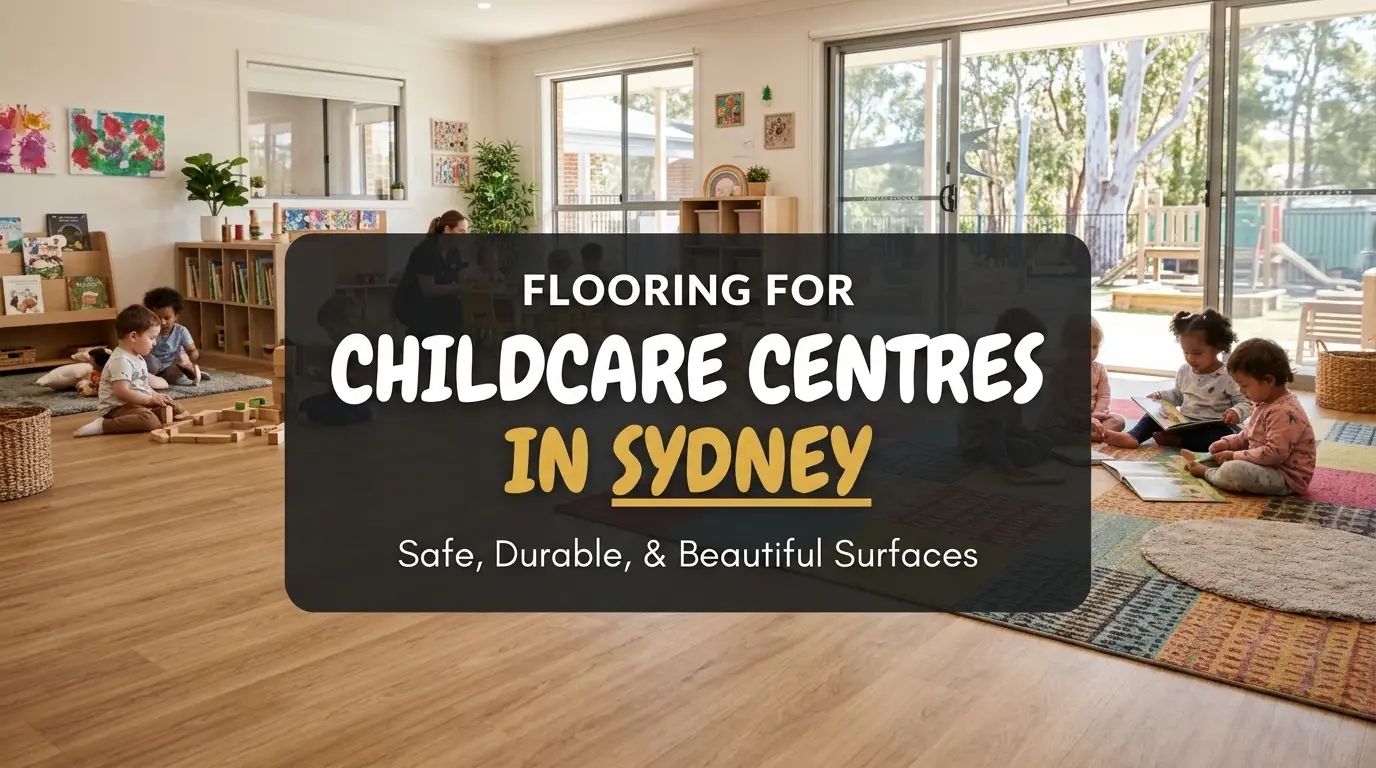
Flooring for Childcare Centres in Sydney: Which Should You Choose?
Choosing the right flooring for a childcare centre involves more than appearance and cost. Floors must support children's daily activities, withstand heavy foot traffic, allow easy cleaning and provide suitable slip resistance for different environments. From classrooms and indoor playrooms to kitchens and bathrooms, each area has specific flooring needs that affect safety, hygiene, comfort and long-term maintenance.
In this blog, we explore the best flooring for Sydney childcare centres, comparing commercial vinyl, rubber flooring, carpet tiles and other options. We also cover room-specific flooring requirements, safety and compliance considerations in New South Wales, flooring installation Sydney costs and maintenance tips to help childcare operators choose flooring that suits their facility, budget and everyday needs.
In this blog
- What Is the Best Flooring for Sydney Childcare Centres?
- Key Factors to Consider When Choosing Childcare Centre Flooring
- Best Flooring Options for Sydney Childcare Centres
- Which Flooring Is Best for Each Area of a Childcare Centre?
- Childcare Flooring Safety and Compliance in New South Wales
- How Much Does Childcare Centre Flooring Cost in Sydney?
- Childcare Flooring Installation, Maintenance and Replacement
- Choosing a Childcare Flooring Supplier and Installer in Sydney
- Frequently Asked Questions
What Is the Best Flooring for Sydney Childcare Centres?
Commercial vinyl flooring is often a practical choice for Sydney childcare centres because it is easy to clean, durable and available in products suited to busy indoor environments. However, choosing the best type of flooring for Sydney childcare centres depends on each room's purpose, moisture exposure, slip-resistance requirements and comfort needs. Rubber flooring and carpet tiles may also suit specific areas, so choosing different materials for different rooms can provide better overall performance.
Flooring Installation SydneyKey Factors to Consider When Choosing Childcare Centre Flooring
Choosing suitable childcare centre flooring requires balancing safety, hygiene, durability, comfort and maintenance. Floors must handle daily activities, frequent cleaning, spills and constant movement from children, educators and furniture. The right material should also suit each room's purpose and meet the relevant product specifications and building requirements. Considering these factors before installation can help reduce maintenance costs and support a safer, more comfortable environment.
1. Slip Resistance and Child Safety
Childcare flooring should provide suitable slip resistance for the activities and conditions in each room. Spilled water, food and cleaning products can create slippery surfaces, particularly in kitchens, bathrooms and meal areas. Check product slip-resistance ratings and suitability for the intended environment rather than relying on appearance alone. Play areas may also require appropriate impact-absorbing surfaces, while level transitions and secure flooring edges help reduce trip hazards.
2. Hygiene, Infection Control and Easy Cleaning
Childcare centre flooring should be easy to clean and maintain as part of the facility's hygiene routine. Non-porous surfaces, such as suitable commercial vinyl, can help prevent spills and dirt from becoming difficult to remove. Flooring should withstand the centre's approved cleaning products and regular cleaning procedures without deteriorating. Pay attention to seams, joints and edges, as these areas can collect dirt or allow moisture to reach the subfloor if they are poorly installed or maintained.
3. Durability for High-Traffic Childcare Environments
Durable commercial flooring can withstand the repeated foot traffic, furniture movement and everyday activities common in childcare centres. Classrooms, corridors and reception areas may experience frequent scuffs, scratches and wear throughout the day. Compare commercial wear ratings, surface protection and manufacturer specifications when selecting a product. Proper subfloor preparation and professional installation also help reduce problems such as lifting edges, damaged joins and premature wear.
4. Indoor Air Quality and Low-VOC Flooring
Flooring products with documented low volatile organic compound (VOC) emissions can help support better indoor air quality in childcare environments. VOCs may be released by some flooring materials, adhesives, coatings and installation products, so assess the complete flooring system rather than the surface alone. Ask suppliers for relevant emissions certificates and product documentation. During installation, follow manufacturer instructions for ventilation, adhesive curing and re-entry times before children and staff use the area again.
5. Acoustic Comfort and Underfoot Comfort
Flooring that reduces impact noise and provides suitable underfoot comfort can make childcare spaces more pleasant for children and educators. Hard surfaces may amplify the sounds of footsteps, toys and moving chairs, while suitable carpet tiles or acoustic underlays can help reduce noise in selected areas. Cushioning may also improve comfort during floor-based activities, depending on the product. Consider cleaning requirements, slip resistance and the room's activities alongside acoustic performance before choosing a softer flooring material.
Ready to Transform Your Home's Flooring?
Get expert guidance on carpets, hybrid, timber, vinyl & laminate flooring. Book a free in-home consultation with our specialists today!
Best Flooring Options for Sydney Childcare Centres
Best flooring options for Sydney childcare centres include commercial vinyl, safety vinyl, rubber flooring, carpet tiles and suitable ceramic or porcelain tiles. Each material offers different benefits in terms of cleaning, durability, comfort, slip resistance and cost. The right choice depends on the room's activities, moisture exposure and maintenance requirements. Comparing these options helps childcare operators select suitable flooring for different areas of their facilities.
1. Commercial Vinyl Flooring
Commercial vinyl flooring is a practical option for childcare classrooms, corridors and general activity areas because it is durable and relatively easy to maintain. For childcare facilities seeking vinyl flooring Sydney, sheet vinyl provides a continuous surface with fewer seams, while vinyl planks and tiles offer different design options. Many products resist everyday spills and stains, but moisture performance depends on the product and installation. Check commercial suitability, wear-layer specifications and cleaning instructions before choosing vinyl flooring for a childcare environment.
Vinyl Flooring In Sydney2. Safety Vinyl Flooring
Safety vinyl flooring is designed for environments where slip resistance, cleanability and reliable surface performance are important. Some products feature textured surfaces to improve grip in areas exposed to water or frequent spills. However, slip resistance varies by product and testing conditions, so confirm the relevant ratings for the intended application. Consider how the surface texture affects cleaning, and follow manufacturer recommendations for installation, maintenance and suitable cleaning products.
3. Rubber Flooring
Rubber flooring can suit selected childcare play areas because it provides a resilient surface with cushioning and potential acoustic benefits. Depending on its design and thickness, it may help reduce impact noise and improve comfort during floor-based activities. However, not all rubber flooring products are designed for impact protection from falls, so verify performance specifications for the intended use. Cleaning requirements, initial costs, surface texture and suitability for the centre's activities should also influence the decision.
4. Carpet Tiles
Carpet tiles can be a suitable option for childcare centres looking for carpet tiles in Sydney, particularly in quieter spaces where acoustic comfort, warmth and a softer underfoot surface are priorities. They may work well in reading corners, staff offices and selected learning areas with lower moisture exposure. Individual tiles can often be replaced when damaged or heavily stained, depending on the product and installation method. However, carpet tiles generally require more attention to spills, stains and deep cleaning than hard flooring, making them less suitable for wet or messy areas.
Carpet Tiles in Sydney5. Ceramic and Porcelain Tiles
Ceramic and porcelain tiles offer a hard-wearing, easy-to-clean surface for selected childcare service areas when the products and installation are suitable for the environment. They may be considered for kitchens, bathrooms and other areas exposed to moisture, provided the surface has appropriate slip resistance. Grout lines require regular cleaning and maintenance, while hard surfaces provide less cushioning than rubber or carpet tiles. Consider impact risks, transitions and the intended use before installing tiles in areas where children play or spend extended periods on the floor.
Which Flooring Is Best for Each Area of a Childcare Centre?
Best flooring for each area of a childcare centre depends on the activities, moisture exposure, cleaning needs and safety requirements of that space. Commercial vinyl often suits classrooms and corridors, while rubber flooring may work well in selected play areas. Kitchens and bathrooms need flooring designed for frequent cleaning and wet conditions, whereas outdoor areas require products specifically rated for external exposure.
1. Flooring for Childcare Classrooms and Learning Rooms
Commercial vinyl flooring is often a practical choice for childcare classrooms and learning rooms because it is easy to clean and handles everyday foot traffic. It can accommodate activities involving toys, art supplies, furniture and occasional spills. Suitable carpet tiles may provide better acoustic comfort in quieter learning areas, although they require more attention to stains and cleaning. Consider underfoot comfort, noise levels, durability and the centre's daily cleaning routine when selecting classroom flooring.
2. Flooring for Indoor Playrooms
Indoor playroom flooring should suit children's activities while providing appropriate slip resistance, comfort and impact performance for the intended use. Rubber flooring may offer cushioning and help reduce impact noise, while commercial vinyl can provide a durable, easy-to-clean surface for general activities. However, ordinary flooring should not automatically be treated as fall-protection surfacing. Check product specifications against the types of play equipment, movement and impact risks present in the room.
3. Flooring for Kitchens, Meal Areas and Bottle Preparation Rooms
Kitchens, meal areas and bottle preparation rooms need flooring that is easy to clean, tolerates frequent moisture exposure and provides suitable slip resistance. Commercial vinyl or appropriately specified tiles may be suitable, depending on the room's layout and cleaning requirements. Food spills, water and cleaning products can create hygiene and slipping concerns if the floor is not maintained properly. Check compatibility with cleaning chemicals, relevant food-handling requirements and the manufacturer's installation recommendations before choosing a product.
4. Flooring for Bathrooms, Toilets and Nappy-Change Areas
Bathrooms, toilets and nappy-change areas require moisture-tolerant flooring with suitable slip resistance and surfaces that support effective cleaning. Appropriate safety vinyl or other products designed for wet environments may be considered. Installation details matter because poorly sealed seams, edges and floor junctions can allow moisture to reach the subfloor. Confirm compatibility with applicable wet-area requirements, including any necessary waterproofing, and follow the product manufacturer's instructions for cleaning and maintenance.
5. Flooring for Corridors, Reception Areas and Staff Rooms
Durable commercial vinyl is often suitable for corridors and reception areas because it can handle frequent foot traffic and routine cleaning. These spaces may experience tracked-in dirt, furniture movement and repeated contact with shoes and equipment. Staff rooms can use vinyl or other suitable flooring depending on comfort and maintenance preferences. Choose products rated for the expected traffic, and pay attention to secure edges, smooth transitions and finishes that complement the centre's interior.
6. Flooring for Outdoor Play Areas and Covered Verandahs
Outdoor play areas and covered verandahs need flooring specifically designed for the level of weather exposure and activities at the site. Suitable external tiles or purpose-designed outdoor safety surfaces may be considered based on slip resistance, drainage and impact requirements. Covered spaces can still experience rain, UV exposure and temperature changes, so indoor flooring should not be assumed suitable for these areas. Check surface temperature, drainage performance, product ratings and maintenance requirements before installation.
Also Read: Best Flooring FOr Sydney Medical & DentalsChildcare Flooring Safety and Compliance in New South Wales
Flooring in New South Wales childcare centres should support a safe, hygienic and well-maintained environment while meeting the requirements that apply to the facility. Operators need to consider childcare service standards, building regulations, wet-area requirements and the intended use of each room. Choosing suitable products and arranging correct installation can help reduce slipping and tripping risks. Requirements should be checked against current regulations and the specific circumstances of the centre.
1. National Quality Framework and Childcare Environment Requirements
The National Quality Framework (NQF) provides a regulatory framework for early childhood education and care services, including expectations relating to children's health, safety and the suitability of the environment. Flooring choices should support hygienic practices, safe movement and the daily activities of children and educators. Operators should assess the condition of existing floors and address damaged, loose or difficult-to-clean surfaces. Confirm the applicable requirements with the relevant NSW regulatory authority rather than assuming one flooring material automatically meets every requirement.
2. Building, Wet-Area and Slip-Resistance Requirements
Childcare flooring must be selected and installed with the relevant building, accessibility and wet-area requirements in mind. Bathrooms, toilets and other areas exposed to water may need appropriate waterproofing systems, suitable floor finishes and correctly sealed junctions. Slip resistance should be assessed against the conditions and activities expected in each space. Check current requirements, product test results and manufacturer installation instructions before finalising the flooring specification.
3. Choosing Flooring That Supports Safe Supervision and Movement
Childcare flooring should provide stable walking surfaces, secure edges and smooth transitions between different floor finishes. Uneven joins, loose carpet tiles, raised edges and unexpected changes in floor level can create trip hazards for children and educators. Clear pathways also help staff supervise children and move equipment safely throughout the centre. During installation, plan transitions carefully and inspect the finished floor regularly to identify damage or other hazards that require attention.
Also Read: Flooring For Rental Properties in SydneyHow Much Does Childcare Centre Flooring Cost in Sydney?
Childcare centre flooring installation cost in Sydney depends on the material, floor area, subfloor condition and complexity of installation. Commercial vinyl, rubber flooring, carpet tiles and ceramic or porcelain tiles have different supply and installation costs. Existing floor removal, surface preparation, finishing materials and work scheduled outside operating hours can also increase the total project budget.
1. Factors That Affect Commercial Flooring Installation Costs
The main factors affecting commercial flooring installation costs are material quality, labour, subfloor preparation and the size of the project. Removing and disposing of existing flooring, levelling the subfloor, applying adhesives and installing transition trims can add to the quote. Childcare centres may also need after-hours or holiday installation to minimise disruption. Request an itemised quote that clearly separates materials, labour and additional work.
2. Flooring Cost Comparison: Vinyl, Rubber, Carpet Tiles and Tiles
Commercial vinyl and carpet tiles can be among the more affordable childcare flooring options, while specialist rubber flooring and porcelain tiles may cost more depending on their specifications and installation requirements. The following table provides indicative Sydney commercial flooring prices to help with initial budgeting.
These are indicative budgeting ranges, not fixed quotes. Actual costs depend on product specifications, project size and installation requirements. Specialist rubber flooring prices can vary considerably by thickness and performance rating.
Subfloor levelling, existing flooring removal, disposal, moisture treatment and after-hours installation may incur additional costs. Ask suppliers to confirm whether GST, adhesives, trims and other finishing work are included before comparing quotes.
3. Balancing Upfront Cost with Long-Term Value
The best-value childcare flooring balances the initial installation cost with maintenance, durability, repair options and future replacement expenses. Commercial vinyl may reduce routine cleaning effort in busy areas, while carpet tiles can allow individual damaged sections to be replaced. Rubber flooring may provide cushioning in selected play spaces, but its specialist specifications can increase the upfront cost. Compare expected service life, maintenance needs and potential disruption during replacement before making a final decision.
Childcare Flooring Installation, Maintenance and Replacement
Proper installation, regular cleaning and timely repairs help childcare centre flooring remain safe, hygienic and durable. Before installation, the subfloor must be suitable for the selected material, and the work should be scheduled to minimise disruption to children and staff. Following manufacturer instructions for cleaning and maintenance can also reduce premature wear. Regular inspections help identify flooring problems before they become more difficult or expensive to address.
1. Preparing the Subfloor Before Installation
Proper subfloor preparation helps ensure childcare flooring is stable, level and suitable for the selected material. Installers should assess surface flatness, moisture levels, cracks and existing damage before work begins. Some products, particularly vinyl flooring, require a smooth surface to prevent imperfections from showing through the finished floor. Repairs, levelling and moisture treatment should follow the flooring manufacturer's specifications to help prevent installation problems and premature damage.
2. Installing Flooring Around Childcare Operating Hours
Scheduling flooring installation during centre closures, weekends or suitable holiday periods can help minimise disruption to childcare activities. The project plan should account for existing flooring removal, subfloor preparation, installation and any required adhesive curing or drying time. Some materials may also need adequate ventilation before the area is used again. Confirm the manufacturer's re-entry instructions and ensure the floor is ready for use before children and staff return to the affected rooms.
3. Cleaning and Maintaining Childcare Centre Floors
Regular cleaning and prompt spill removal help maintain childcare flooring and support everyday hygiene. Establish a cleaning routine that matches the flooring material, room activities and centre's hygiene procedures. Use manufacturer-approved cleaning products and avoid chemicals or equipment that could damage the surface, adhesive or protective finish. Inspect high-traffic areas regularly for stains, loose edges, damaged seams and other issues that may require repair.
4. Signs Your Childcare Centre Flooring Needs Replacement
Damaged seams, lifting edges, persistent stains and worn surfaces can indicate that childcare centre flooring needs repair or replacement. Flooring that becomes difficult to clean or develops uneven sections may also require professional assessment. Minor damage may be repairable, particularly when individual carpet tiles or replaceable vinyl planks are involved. However, widespread deterioration, recurring moisture problems or damage that compromises safe use may justify replacement after the underlying cause has been addressed.
Choosing a Childcare Flooring Supplier and Installer in Sydney
Choosing a suitable childcare flooring supplier and installer involves checking commercial experience, product suitability, installation quality and the clarity of the project quote. Childcare environments have specific requirements for hygiene, safety, durability and daily maintenance, so the selected provider should understand the needs of the facility. Comparing product documentation, installation methods and aftercare guidance helps operators make informed decisions before committing to a flooring project.
1. What to Check Before Requesting a Flooring Quote?
Before requesting a flooring quote, check the supplier's commercial flooring experience, product specifications and installation inclusions. Ask whether the proposed materials suit the intended rooms and whether relevant slip-resistance, emissions or other product documentation is available. The quote should clearly identify material costs, labour, subfloor preparation, removal, disposal and finishing work. Confirm warranty conditions, maintenance recommendations and any exclusions to avoid unexpected expenses during the project.
2. Why Professional Flooring Installation Matters?
Professional flooring installation helps ensure the selected material is fitted correctly and performs according to its specifications. Proper subfloor preparation, accurate cutting, secure joins and suitable transitions can reduce problems such as lifting edges, uneven surfaces and premature wear. Installers should also follow manufacturer instructions for adhesives, moisture conditions, curing times and cleaning after installation. Correct installation supports flooring performance, but the finished system must still be assessed against applicable building and safety requirements.
3. Flooring Supply and Installation with Gorkha Flooring
Gorkha Flooring provides flooring supply and installation services to help customers select suitable flooring products for their project requirements. For childcare facilities, material selection should consider room activities, moisture exposure, cleaning routines, expected foot traffic and budget. Before proceeding, Sydney childcare operators should confirm the availability of the required products and installation services, along with any project-specific requirements. Contact Gorkha Flooring to discuss your flooring needs and request a quote based on your facility's layout, preferred materials and installation scope.
Frequently Asked Questions
1. What Is the Safest Flooring for a Childcare Centre?
The safest flooring depends on the room's activities, slip-resistance requirements, impact risks and cleaning needs. Commercial vinyl may suit classrooms and corridors, while suitable rubber flooring can provide cushioning in selected play areas. Product specifications, correct installation and regular maintenance are equally important when selecting flooring for children.
2. Is Vinyl Flooring Suitable for Childcare Centres?
Commercial vinyl flooring is often suitable for childcare centres because it is durable, easy to clean and available in products designed for busy indoor environments. Many options tolerate everyday spills, although moisture performance depends on the product and installation. Choose flooring with suitable commercial specifications and follow the manufacturer's cleaning and maintenance instructions.
3. Is Rubber Flooring Better Than Vinyl for Indoor Play Areas?
Rubber flooring may be preferable where cushioning and impact comfort are priorities, while vinyl can be more practical for general activities and easy cleaning. Rubber products vary in thickness, surface texture and impact performance, so they must be matched to the intended play activities. Neither material is automatically safer for every situation; compare cleaning requirements, durability, slip resistance and product specifications before choosing.
4. How Often Should Childcare Centre Flooring Be Replaced?
Childcare centre flooring should be replaced when its condition, hygiene or performance no longer meets the facility's needs. There is no universal replacement schedule because product quality, foot traffic, cleaning routines and installation all affect service life. Inspect floors regularly for lifting edges, damaged seams, persistent stains and uneven surfaces. Repair may be sufficient for isolated damage, while widespread deterioration may require replacement.
5. Can Childcare Centre Flooring Be Installed During School or Centre Holidays?
Yes, installing childcare flooring during scheduled closures or holiday periods can help minimise disruption to children and staff. The schedule should allow enough time for removing existing flooring, preparing the subfloor, installing the new material and completing any required adhesive curing or ventilation. Confirm the manufacturer's instructions before reopening the affected rooms to ensure the flooring is ready for use.