
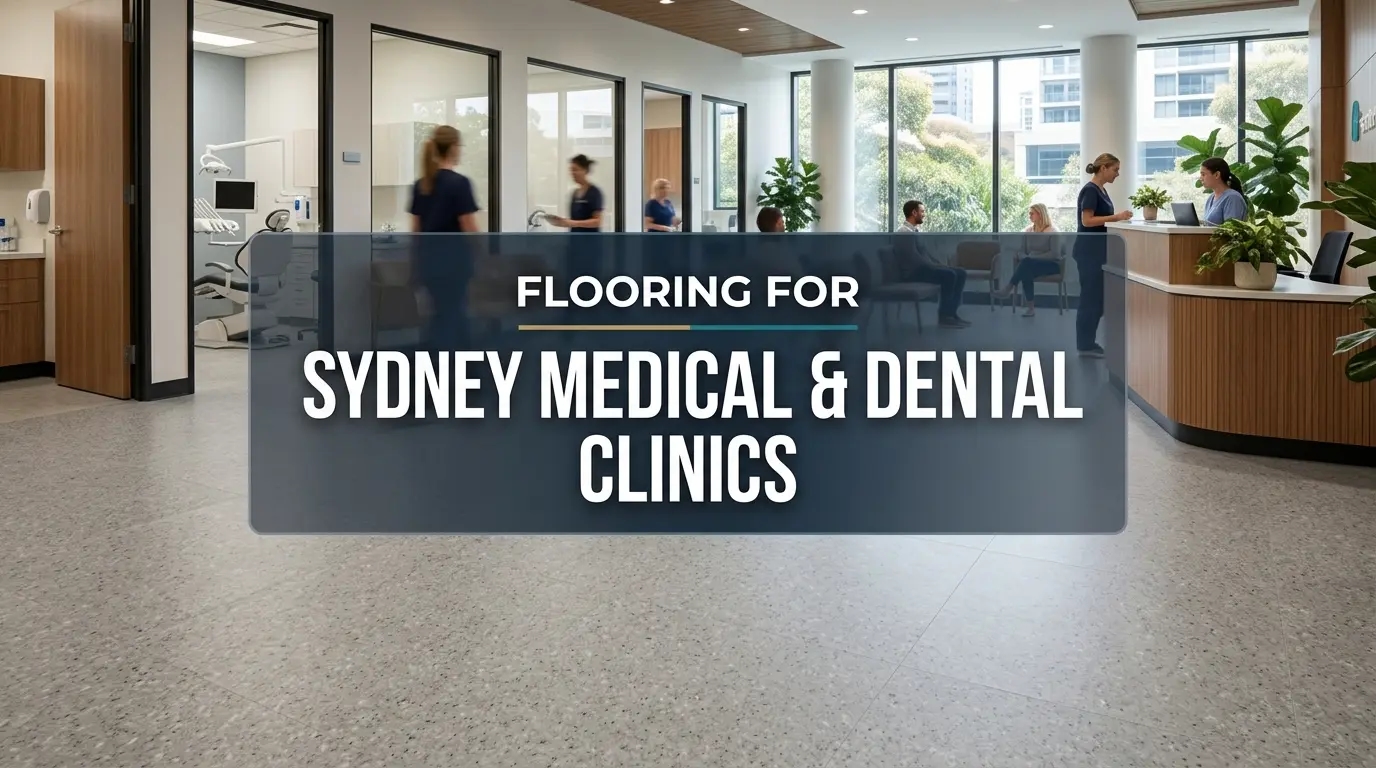
Which is the best Flooring for Sydney Medical and Dental Clinics?
Medical and dental clinics in Sydney need flooring that can handle frequent foot traffic, regular cleaning, moisture, spills and the daily movement of patients, staff and equipment. Unlike residential flooring, clinic flooring must also support hygiene, slip resistance, durability, easy maintenance and a professional appearance.
In this blog, we explain which flooring is best for Sydney medical and dental clinics, comparing commercial vinyl, sheet vinyl, rubber flooring, carpet tiles and tiles for different clinic areas. You will learn how each option performs in treatment rooms, waiting areas, corridors and other clinical spaces, along with the key factors to consider before choosing and flooring installation in Sydney.
In this blog
- What Should You Look for in Flooring for Sydney Medical and Dental Clinics?
- What Is the Best Flooring for Sydney Medical and Dental Clinics?
- Best Flooring Options for Different Areas of a Medical or Dental Clinic
- How Does Sydney's Climate Affect Medical and Dental Clinic Flooring?
- Vinyl vs Rubber vs Carpet Tiles vs Tile for Sydney Clinics
- How Much Does Flooring for Sydney Medical and Dental Clinics Cost?
- Why Is Professional Flooring Installation Important in Medical and Dental Clinics?
- How Can Medical and Dental Clinics Maintain Their Flooring?
- Why Choose Gorkha Flooring for Medical and Commercial Flooring in Sydney?
- Conclusion
- FAQS
What Should You Look for in Flooring for Sydney Medical and Dental Clinics?
The key factors to consider in flooring for Sydney medical and dental clinics are hygiene, easy cleaning, infection control, slip resistance, durability, moisture and chemical resistance, and acoustic performance. Clinic flooring needs to support daily cleaning while handling patients, staff, equipment and frequent foot traffic. When comparing the best types of flooring for Sydney, it should also suit the specific requirements of treatment rooms, waiting areas, corridors and other clinical spaces. Product specifications should be checked to ensure the selected flooring is suitable for its intended application.
Flooring Installation Sydney1. Hygiene and Easy Cleaning
Hygiene and easy cleaning are essential when choosing flooring for medical and dental clinics because surfaces are regularly exposed to dirt, spills and cleaning routines. Flooring with a smooth, easily cleanable surface can make routine maintenance more practical. Resistance to staining can also help maintain the floor's appearance in busy areas. The selected flooring should be compatible with the clinic's cleaning and maintenance procedures.
2. Infection Control and Seamless Flooring
Infection control considerations make seamless and hygienically detailed flooring useful in areas where cleanliness is a priority. Fewer joints and gaps can help reduce places where dirt and moisture may accumulate. Depending on the flooring system, welded seams and coved edges may also be used to create more hygienic transitions between the floor and walls. These details should be selected according to the room's requirements and the flooring manufacturer's specifications.
3. Slip Resistance and Patient Safety
Slip resistance is important because medical and dental clinics can experience spills, cleaning moisture and tracked-in water from patients and staff. Flooring should provide suitable traction for the conditions in which it will be used, particularly around entrances, treatment areas and other spaces where liquids may be present. The needs of patients with different mobility levels should also be considered. Product slip-resistance ratings should be checked before selection.
4. Durability and Heavy Foot Traffic
Durability is important for clinic flooring because reception areas, corridors and treatment rooms can experience repeated pedestrian traffic throughout the day. Flooring should be selected according to the expected level of use and the type of equipment or furniture moving across the surface. Commercial-grade products may be appropriate for areas exposed to heavier traffic. Staff areas may have different requirements, so the flooring should be matched to each space.
5. Moisture and Chemical Resistance
Medical and dental clinic flooring should have suitable resistance to moisture, cleaning solutions and chemicals used in the intended environment. Water and spills can occur during routine clinic operations, while cleaning and disinfecting products may be used frequently. Not every flooring product has the same chemical resistance, so manufacturer specifications should be checked before installation. Choosing a product suited to the clinic's cleaning procedures can help reduce premature surface damage.
6. Acoustic Performance and Patient Comfort
Acoustic performance can improve patient and staff comfort by helping manage footsteps, trolley movement and other everyday sounds within a clinic. Hard flooring surfaces can reflect sound, particularly in corridors and larger waiting areas. Flooring systems with suitable acoustic properties can help create a quieter environment. The overall floor construction, underlay where applicable and room layout should be considered rather than assessing the flooring surface alone.
What Is the Best Flooring for Sydney Medical and Dental Clinics?
Commercial sheet vinyl is often a strong flooring option for Sydney medical and dental clinics because it can provide easy cleaning, moisture resistance, durability and hygienic installation options, while rubber, carpet tiles and tiles can suit specific clinic areas. The best choice depends on how each space is used, including treatment rooms, reception areas, corridors and waiting rooms. Flooring should be selected according to traffic, cleaning procedures, moisture exposure, acoustic requirements and patient comfort. Product specifications should also be checked to confirm suitability for the intended clinical application.
1. Sheet Vinyl Flooring for Medical and Dental Clinics
Sheet vinyl can be a practical choice for medical and dental clinical areas because vinyl flooring in Sydney can provide a continuous surface with options for heat-welded seams and hygienic detailing. Its smooth surface can make routine cleaning easier, while suitable products can provide moisture resistance and durability for regular clinic use. Sheet vinyl can be considered for treatment rooms and other areas where frequent cleaning is required. Installation should follow the flooring manufacturer's requirements, including any specified seam-welding or cove-forming methods.
Vinyl Flooring In Sydney2. Commercial Vinyl Flooring for High-Traffic Areas
Commercial vinyl flooring can suit busy clinic areas such as reception spaces, waiting rooms, corridors and staff areas where durability and easy maintenance are important. It is available in different formats, designs and performance specifications for varying levels of commercial traffic. Vinyl can also provide practical resistance to everyday spills and moisture when the selected product is designed for the application. The appropriate wear and slip-resistance characteristics should be checked before installation.
3. Rubber Flooring for Healthcare Environments
Rubber flooring can be suitable for healthcare environments where underfoot comfort, slip resistance, durability and acoustic performance are important. Its resilient surface can provide a more comfortable feel underfoot than some harder flooring materials. Suitable rubber products can also help reduce some impact and footstep noise in busy clinical spaces. Product suitability, cleaning requirements and chemical resistance should be checked before using rubber flooring in specific medical or dental areas.
4. Carpet Tiles for Clinic Reception and Waiting Areas
Carpet tiles can work well in clinic reception and waiting areas where acoustic comfort, patient comfort and appearance are priorities. Their textile surface can help reduce reflected sound and create a softer environment for patients and visitors. Carpet tiles for Sydney clinics can also be replaced individually when damaged, which can simplify localised repairs without removing the entire floor. However, carpet tiles are generally less suitable for treatment rooms and areas exposed to frequent moisture or clinical spills.
Carpet Tiles In Sydney5. Porcelain and Ceramic Tiles in Medical Clinics
Porcelain and ceramic tiles can provide durability and moisture resistance in selected medical clinic areas, particularly where hard, washable surfaces are required. Their resistance to water can make them suitable for certain wet areas and spaces exposed to regular cleaning. However, grout joints require appropriate cleaning and maintenance, and the surface should provide suitable slip resistance for the intended conditions. Tile selection should therefore consider traffic, cleaning procedures, moisture exposure and the specific requirements of the clinic.
Best Flooring Options for Different Areas of a Medical or Dental Clinic
Best flooring for different areas of a medical or dental clinic depends on traffic, hygiene requirements, moisture exposure, acoustic needs, comfort and cleaning routines. Treatment room may require different flooring from a waiting room or staff office. Selecting flooring according to how each space is used can improve practicality, safety and long-term performance. Product specifications should always be checked for the intended clinical application.
1. Reception and Waiting Rooms
Reception and waiting rooms need flooring that combines a professional appearance with comfort, acoustic performance and durability for regular patient traffic. Commercial vinyl can provide a practical, easy-to-maintain surface, while carpet tiles can offer greater acoustic comfort and a softer underfoot feel. The flooring should also cope with frequent movement of patients, visitors, reception staff and furniture. Colour and pattern selection can help maintain a clean and welcoming appearance between maintenance cycles.
2. Treatment and Examination Rooms
Treatment and examination rooms require flooring that supports hygiene, frequent cleaning and resistance to moisture and suitable cleaning chemicals. Sheet vinyl can be considered where a continuous, cleanable surface and hygienic detailing are priorities. Flooring should have suitable resistance to the cleaning products used in the room and should be installed according to the manufacturer's requirements. Seamless or welded installation may also be appropriate for specific clinical applications.
3. Dental Surgery and Procedure Rooms
Dental surgery and procedure rooms need flooring that can manage spills, regular disinfection, equipment movement and potentially wet surfaces. Commercial sheet vinyl and other suitable resilient flooring systems can provide practical options where easy cleaning and moisture resistance are important. The selected surface should also provide appropriate slip resistance for the expected conditions. Flooring specifications should be checked for chemical resistance and compatibility with the clinic's cleaning procedures.
4. Medical and Dental Clinic Corridors
Clinic corridors need durable flooring that can withstand heavy pedestrian traffic while remaining easy to clean and comfortable for patients and staff. Commercial vinyl, suitable rubber flooring and carpet tiles can be considered depending on the building's acoustic and maintenance requirements. Corridors may also experience trolley movement, tracked-in moisture and frequent cleaning. The selected flooring should therefore be rated for the expected traffic and installed with appropriate transitions.
5. Staff Rooms and Offices
Staff rooms and offices can use flooring that places greater emphasis on comfort, appearance and acoustic performance because these areas generally experience lower traffic than clinical spaces. Carpet tiles can provide a softer surface and help reduce everyday office noise, while commercial vinyl can offer easier cleaning. The choice can also reflect the overall interior design of the clinic. Flooring should still be durable enough for regular staff use and furniture movement.
6. Toilets and Clinical Wet Areas
Toilets and clinical wet areas require flooring with suitable water resistance, slip resistance, drainage characteristics and easy-cleaning properties. Porcelain or ceramic tiles can be considered where moisture resistance and hard-wearing performance are priorities. Grout joints need appropriate cleaning and maintenance, while the surface should provide suitable traction for wet conditions. Installation should also account for falls, drainage and the requirements of the specific wet-area application.
Ready to Transform Your Home's Flooring?
Get expert guidance on carpets, hybrid, timber, vinyl & laminate flooring. Book a free in-home consultation with our specialists today!
How Does Sydney's Climate Affect Medical and Dental Clinic Flooring?
Sydney's climate can affect medical and dental clinic flooring through humidity, moisture, rainfall and wet footwear, making moisture resistance, suitable entrance protection and regular maintenance important considerations. Water can be tracked into clinics by patients, staff and visitors, particularly around entrances during wet weather. Flooring should therefore be selected according to the building's moisture exposure and the manufacturer's application requirements. Regular cleaning and prompt moisture management can also help protect the flooring from staining and premature deterioration.
1. Humidity and Moisture
Humidity and moisture can affect clinic flooring by increasing exposure to damp conditions, particularly around entrances, wet areas and spaces where water is regularly used. Moisture can also enter through tracked-in water or cleaning activities. Certain flooring materials may be more sensitive to moisture, movement or dimensional changes than others, depending on their construction and installation system. The selected flooring and subfloor should therefore be assessed for the expected moisture conditions before installation.
2. Rain and Wet Footwear
Rain and wet footwear can introduce water and dirt into medical and dental clinics, making entrance areas an important consideration when selecting and protecting flooring. Suitable water-resistant flooring can help manage everyday moisture, while entrance mats can capture water and dirt before they reach the main floor. Entrances should also have appropriate transitions and drainage where required. Regularly cleaning and replacing saturated mats can help maintain a safer and cleaner entry area.
3. Cleaning and Seasonal Maintenance
Regular cleaning and seasonal maintenance can help manage moisture, staining and surface wear caused by Sydney's changing weather conditions. Clinics should follow cleaning schedules appropriate to the flooring material and the level of daily use. Spills and tracked-in moisture should be addressed promptly to reduce the risk of staining or surface deterioration. Cleaning products and methods should also follow the flooring manufacturer's recommendations to avoid damaging the surface.
Vinyl vs Rubber vs Carpet Tiles vs Tile for Sydney Clinics
Sheet vinyl, commercial vinyl, rubber, carpet tiles and tile can all be suitable for Sydney medical and dental clinics, but their performance differs across hygiene, durability, safety, acoustics and moisture resistance. The right option depends on the specific clinic area, cleaning procedures, traffic levels and moisture exposure.
Performance varies by product, installation system, substrate, cleaning procedures and site conditions. Slip resistance, chemical resistance, moisture performance and suitability for healthcare or dental applications should be confirmed against the specific manufacturer's specifications before installation.
How Much Does Flooring for Sydney Medical and Dental Clinics Cost?
The cost of flooring for Sydney medical and dental clinics depends on the material, installation method, clinic size, subfloor condition, removal requirements and long-term maintenance needs. Vinyl, rubber, carpet tiles and tile can have different supply and installation costs, while complex clinical spaces may require additional preparation. Larger projects may also involve scheduling and access considerations to minimise disruption to clinic operations. A site assessment and project-specific quotation provide a more accurate cost than a general square-metre estimate.
1. Flooring Material Costs
Flooring material costs vary depending on the type, quality, performance rating and quantity of flooring required for the clinic. Sheet and commercial vinyl can have different price points depending on their construction and specifications, while rubber flooring may have a higher upfront cost in some applications. Carpet tiles and porcelain or ceramic tiles also vary considerably by product and design. The selected material should be assessed against the clinic's hygiene, durability, moisture and traffic requirements rather than price alone.
2. Commercial Flooring Installation Costs
Commercial flooring installation costs depend on labour requirements, clinic size, installation complexity, access and the amount of preparation required before fitting. Larger clinics may require more installers, materials and project coordination, while smaller areas may involve different mobilisation and scheduling considerations. Complex layouts, multiple rooms, detailed transitions or specialised installation methods can also increase labour requirements. Installation should follow the flooring manufacturer's requirements for the selected product.
3. Subfloor Preparation and Removal Costs
Subfloor preparation can add to the total flooring cost when existing flooring needs to be removed or the underlying surface requires repairs, levelling or moisture assessment. An uneven or damaged subfloor may require additional preparation before new flooring can be installed correctly. Existing adhesives, old floor coverings and surface contaminants may also need to be removed. Addressing these conditions before installation can help create a suitable base for the new flooring system.
4. Long-Term Maintenance and Replacement Costs
Long-term flooring costs include cleaning, repairs, replacement and the expected performance of the flooring under the clinic's actual operating conditions. A lower upfront price may not represent the lowest overall cost if the flooring requires frequent repairs or replacement. Flooring that allows localised repairs, such as replaceable carpet tiles, may offer practical benefits in some areas. Cleaning requirements, traffic levels, product durability and expected service conditions should therefore be considered when assessing the total lifecycle cost.
Why Is Professional Flooring Installation Important in Medical and Dental Clinics?
Professional flooring installation is important in medical and dental clinics because it helps ensure proper subfloor preparation, accurate seaming, suitable moisture assessment, hygienic detailing and compliance with manufacturer requirements. Clinic flooring must perform under frequent cleaning, foot traffic, moisture exposure and daily equipment movement. Correct installation can also help reduce avoidable flooring problems and support long-term performance. Careful scheduling can minimize disruption to patients, staff and clinic operations.
1. Proper Subfloor Preparation
Proper subfloor preparation provides a stable and suitable surface for installing new clinic flooring. The subfloor may need to be cleaned, levelled, repaired or otherwise prepared depending on its condition and the selected flooring system. Uneven or unsuitable surfaces can affect the finished floor and may contribute to installation problems. Preparation requirements should be assessed before flooring installation begins.
2. Correct Seaming and Joint Installation
Correct seaming and joint installation are particularly important for flooring systems where moisture control and hygienic surfaces are priorities. Sheet vinyl, for example, may use heat-welded seams to create a more continuous surface when specified by the manufacturer. Poorly installed joints can affect the floor's appearance, performance and cleanability. Installation methods should therefore follow the requirements of the specific flooring product.
3. Moisture and Surface Assessment
Moisture and surface assessment helps identify conditions that could affect flooring performance before installation begins. Excess moisture in the subfloor can create problems for some flooring products and installation systems. The condition and suitability of the substrate should therefore be assessed according to the flooring manufacturer's requirements. Any identified moisture or surface issues should be addressed before the new floor is installed.
4. Hygienic Flooring Detailing
Hygienic flooring detailing can help create easier-to-clean surfaces in areas where clinical cleanliness is important. Depending on the flooring system and room requirements, this may include reduced joints, sealed seams or coved flooring details at wall junctions. These features can reduce areas where dirt and moisture may accumulate. The appropriate detailing should be selected based on the flooring system and intended clinical application.
5. Minimising Disruption to Clinic Operations
Professional installation can help minimise disruption to patients, staff and daily clinic operations during a flooring project. Medical and dental clinics may need careful scheduling because treatment rooms, reception areas and corridors must remain functional where possible. Installation can be planned in stages or around operating hours depending on the project. Clear coordination can also help manage access, furniture movement and drying or curing requirements.
6. Following Manufacturer Installation Requirements
Following the manufacturer's installation requirements is essential because flooring products can have different preparation, adhesive, moisture, seam and installation specifications. Using an unsuitable installation method can affect the flooring's performance and may create avoidable problems. Product instructions should be reviewed before installation, including requirements for the substrate and environmental conditions. Professional installers can apply the specified installation method appropriate to the selected flooring system.
How Can Medical and Dental Clinics Maintain Their Flooring?
Medical and dental clinics can maintain their flooring by following the manufacturer's cleaning instructions, removing spills promptly, using suitable cleaning products, protecting high-traffic areas and repairing damage early. Regular maintenance helps manage dirt, moisture, stains and everyday wear caused by patients, staff and equipment. Cleaning routines should also reflect the flooring material and the clinic's operating conditions. Regular professional maintenance may be appropriate for larger or heavily used clinical areas.
1. Follow the Manufacturer's Cleaning Recommendations
Following the manufacturer's cleaning recommendations helps protect the flooring while maintaining its intended performance and appearance. Different flooring materials can have different requirements for cleaning methods, equipment, detergents and disinfectants. Using unsuitable products or excessive moisture may damage some flooring surfaces or affect their finish. Clinic cleaning procedures should therefore be compatible with the specific flooring product installed.
2. Remove Spills and Contaminants Promptly
Spills and contaminants should be removed promptly to reduce staining, surface deterioration and slip risks within the clinic. Treatment rooms, dental surgery areas and other clinical spaces may experience occasional spills during daily operations. Leaving liquids or contaminants on the surface for extended periods can create avoidable cleaning and safety issues. Staff should follow the clinic's established procedures for dealing with spills and contaminated materials.
3. Use Appropriate Cleaning and Disinfection Products
Medical and dental clinics should use cleaning and disinfection products that are suitable for both the flooring and the clinic's hygiene procedures. Some flooring materials can be affected by aggressive chemicals, concentrated solutions or cleaning methods that are not recommended by the manufacturer. Product compatibility should therefore be checked before introducing a cleaning or disinfecting product. Following the recommended dilution, application and rinsing procedures can also help protect the flooring.
4. Protect High-Traffic Entrance Areas
Protecting high-traffic entrance areas can help reduce the amount of dirt, grit and moisture carried onto clinic flooring. Suitable entrance mats can capture water and debris from footwear before they reach reception areas and corridors. Mats should be maintained and replaced when they become saturated or excessively worn. Regular entrance cleaning can further reduce the amount of abrasive dirt reaching the main floor surface.
5. Repair Damaged Flooring Early
Repairing damaged flooring early can help prevent small defects from becoming larger maintenance or safety problems. Damaged seams, lifted edges, cracked tiles or worn sections can affect cleaning, appearance and safe movement through the clinic. The appropriate repair method depends on the flooring material and the extent of the damage. Repairs should be carried out according to the manufacturer's recommendations or by a suitably qualified flooring professional.
6. Schedule Regular Professional Maintenance
Regular professional maintenance can help identify flooring problems early and maintain performance in areas exposed to heavy traffic and frequent cleaning. Professional maintenance may include deeper cleaning, inspection of seams and joints, and assessment of worn or damaged areas. The required frequency depends on the flooring type, traffic levels and clinic environment. Planned maintenance schedule can help reduce unexpected repairs and extend the useful service life of the flooring.
Why Choose Gorkha Flooring for Medical and Commercial Flooring in Sydney?
Gorkha Flooring supplies and installs commercial flooring for medical clinics, dental practices and other businesses in Sydney, helping customers select suitable flooring based on traffic levels, moisture exposure, cleaning requirements, appearance and budget. The team can assist with product selection, subfloor preparation and professional installation, with flooring options selected according to the requirements of each space. Planning the installation around clinic operations can also help minimise disruption to patients and staff.
Flooring supply and installation: Source suitable commercial flooring and arrange professional installation for medical, dental and other commercial spaces.
Commercial flooring options: Explore commercial vinyl and other flooring products suited to different traffic, moisture and maintenance requirements.
Product selection assistance: Select flooring based on the intended clinic area, cleaning procedures, foot traffic and overall project requirements.
High-traffic flooring solutions: Choose flooring options designed for areas such as reception spaces, corridors, waiting rooms and other busy commercial areas.
Subfloor preparation: Prepare the existing surface according to the requirements of the selected flooring system before installation.
Professional installation: Install flooring using methods appropriate to the product and site conditions.
Moisture and maintenance considerations: Assess moisture exposure and cleaning requirements when selecting flooring for clinical and commercial environments.
Minimising disruption: Plan flooring installation around clinic operations where practical to help reduce disruption to patients, staff and daily activities.
Project-specific quotes: Request a project-specific quote based on the clinic's flooring area, selected product, subfloor condition and installation requirements.
Conclusion
Choosing flooring for Sydney medical and dental clinics requires careful consideration of hygiene, durability, slip resistance, moisture exposure, cleaning requirements, acoustic performance and patient comfort. Sheet vinyl and commercial vinyl can be practical options for many clinical and high-traffic areas because of their cleanability and moisture resistance, while rubber, carpet tiles and tile can provide useful alternatives for specific spaces and requirements.
The flooring should always be selected according to the intended application and the manufacturer's specifications. Professional installation, proper subfloor preparation and suitable hygienic detailing can also support long-term performance. Gorkha Flooring supplies and installs commercial flooring in Sydney and can help clinics select suitable flooring based on their space, traffic, maintenance and project requirements. Contact Gorkha Flooring to discuss your clinic flooring project and request a project-specific quote.
FAQS
What is the best flooring for a medical clinic in Sydney?
Commercial sheet vinyl is often a practical option for medical clinics because it can provide easy cleaning, moisture resistance, durability and hygienic installation options. Commercial vinyl, rubber, carpet tiles and tile can also suit specific clinic areas depending on traffic, moisture exposure, acoustic requirements and cleaning procedures.
Is vinyl flooring suitable for dental clinics?
Yes, suitable commercial vinyl flooring can be used in dental clinics where durability, easy cleaning and moisture resistance are important. Sheet vinyl can be particularly useful in clinical areas where a continuous, cleanable surface is required. The selected product should be rated for the intended application and compatible with the clinic's cleaning and disinfection procedures.
Is sheet vinyl better than tiles for medical clinics?
Sheet vinyl and tile offer different performance characteristics, so the better option depends on the specific area and requirements of the medical clinic. Sheet vinyl can provide fewer joints and easier hygienic detailing, while porcelain and ceramic tiles can offer excellent durability and moisture resistance. Cleaning requirements, slip resistance, grout maintenance and the intended clinical application should all be considered.
What flooring is easiest to clean in a dental clinic?
Sheet vinyl and commercial vinyl are generally practical options where easy cleaning is a priority in dental clinics. Their smooth surfaces can make routine removal of dirt and spills easier, while suitable products can provide moisture resistance. Cleaning products and methods should always follow the flooring manufacturer's recommendations.
What flooring is best for a medical clinic waiting room?
Commercial vinyl and carpet tiles can both be suitable for medical clinic waiting rooms, depending on the clinic's priorities. Commercial vinyl offers easy cleaning and durability for regular patient traffic, while carpet tiles can provide greater acoustic comfort and a softer underfoot feel. Appearance, maintenance, traffic and patient comfort should be considered when selecting the flooring.
Does medical clinic flooring need to be slip resistant?
Yes, medical clinic flooring should provide suitable slip resistance for the conditions in which it is used, particularly where spills, cleaning moisture or tracked-in rainwater may occur. The required performance can vary between entrances, treatment rooms, corridors and wet areas. The flooring's product specifications should be checked to ensure it is appropriate for the intended environment.
How long does commercial clinic flooring last?
The service life of commercial clinic flooring depends on the product, traffic levels, installation quality, cleaning practices and environmental conditions. Commercial-grade vinyl, rubber, carpet tiles and tile can have different expected service lives under different conditions. Following manufacturer maintenance recommendations and addressing damage early can help maintain flooring performance over time.
How much does medical clinic flooring cost in Sydney?
Medical clinic flooring costs in Sydney vary according to the flooring material, project size, installation method, subfloor condition, removal requirements and any specialised clinical requirements. Sheet vinyl, commercial vinyl, rubber, carpet tiles and tile have different material and installation costs. Site assessment and project-specific quotation provide a more accurate estimate than a general per-square-metre price.