
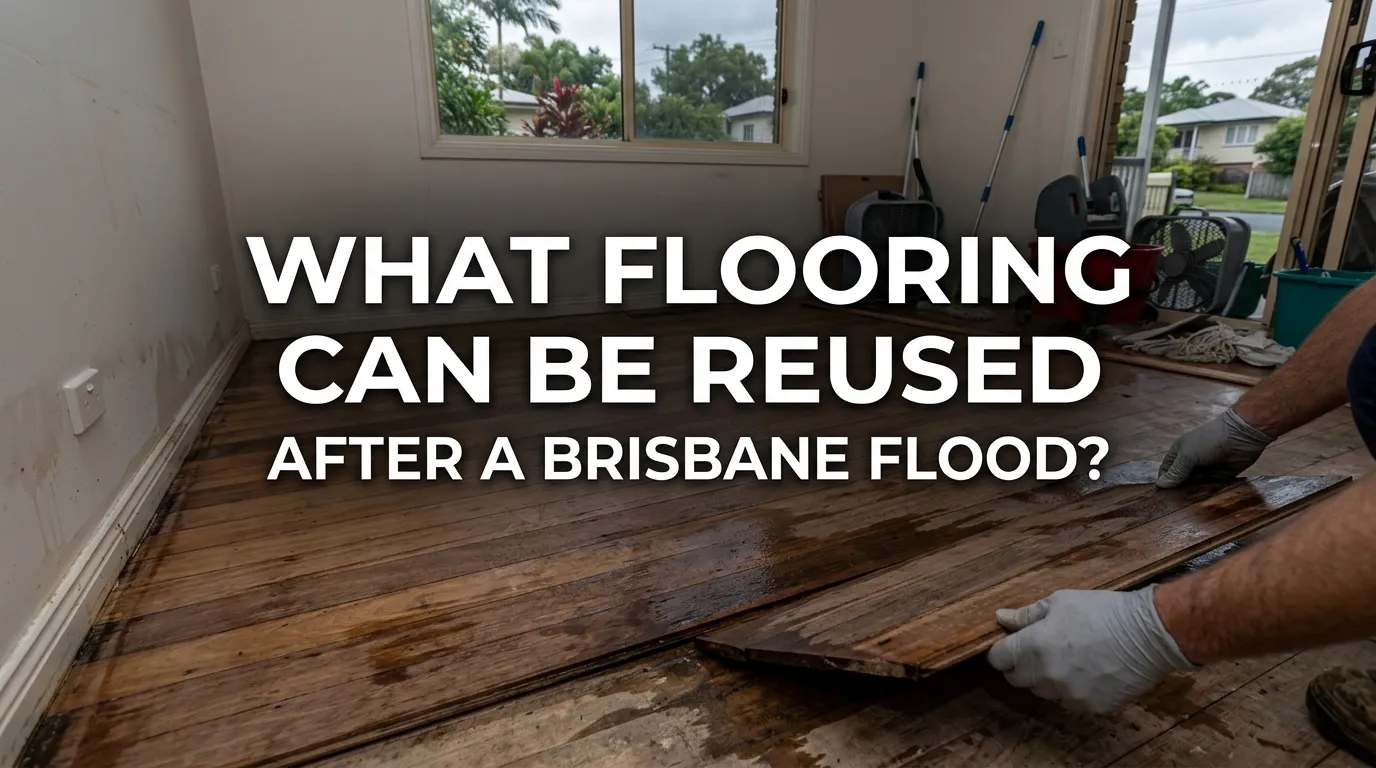
What Flooring Can Be Reused After a Brisbane Flood? Complete Guide 2027
Brisbane floods can leave homeowners unsure whether damaged flooring needs to be completely replaced or can be safely restored and reused. The type of flooring, floodwater exposure, moisture levels, mould growth and subfloor condition all influence whether the existing flooring can be recovered.
In this blog, we explain what flooring can be reused after a Brisbane flood, including timber, engineered timber, vinyl, hybrid, laminate, tile and carpet flooring. You will also learn how to assess flood-damaged flooring, when restoration is possible, when replacement is more practical, and what to consider before flooring installation in Brisbane.
In this blog
- Can Flooring Be Reused After a Brisbane Flood?
- Which Flooring Types Can Be Reused After a Brisbane Flood?
- Which Flooring Usually Needs to Be Replaced After Flooding?
- How Do You Check if Flood-Damaged Flooring Is Safe to Reuse?
- Can Timber Flooring Be Restored After a Brisbane Flood?
- What Happens to the Subfloor After a Brisbane Flood?
- What Should You Do With Flooring Immediately After a Brisbane Flood?
- Flood-Damaged Flooring Reuse vs Replacement: Cost Considerations
- Brisbane Flood Flooring: Which Materials Are Most Suitable for Future Flood Risk?
- Why Professional Flooring Assessment Matters After a Brisbane Flood?
- Who Supplies and Installs Flood-Resistant Flooring in Brisbane?
- Conclusion
- FAQS
Can Flooring Be Reused After a Brisbane Flood?
Yes, some flooring can be reused after a Brisbane flood, but the decision depends on the flooring material, extent of water damage, type of floodwater and condition of the subfloor. Flooring exposed to clean water may have a better chance of recovery if it can be dried quickly and thoroughly. However, flooring exposed to contaminated floodwater may require replacement because of potential mold, bacteria and other health risks.
Professional assessment can help determine whether the flooring can be safely dried, cleaned, repaired and restored. The condition of the subfloor should also be checked before any flooring is reused or reinstalled.
What Factors Determine Whether Flood-Damaged Flooring Can Be Reused?
Several factors determine whether flood-damaged flooring can be reused, including the flooring material, how long it was exposed to water, the type of floodwater and the extent of moisture and structural damage. These factors should be assessed together because flooring that appears visually acceptable may still have hidden moisture or damage underneath.
Flooring material: Timber, tiles, vinyl, hybrid, laminate and carpet respond differently to prolonged water exposure and may have different restoration options.
Duration of water exposure: Flooring exposed to water for a longer period may absorb more moisture, increasing the risk of swelling, warping, delamination or other damage.
Type of floodwater: Clean rainwater presents different risks from stormwater or sewage-contaminated floodwater, which may make affected flooring unsuitable for reuse.
Moisture levels: Flooring and subfloors should be sufficiently dry before restoration or reinstallation to reduce the risk of mold and ongoing moisture problems.
Mould and bacterial growth: Visible mould, persistent dampness or contamination can affect whether flooring can be safely restored and reused.
Condition of the subfloor: A damaged or damp subfloor can prevent otherwise reusable flooring from being safely reinstalled.
Structural damage: Buckling, severe swelling, delamination, cracking or loss of structural integrity may indicate that replacement is more appropriate than restoration.
Which Flooring Types Can Be Reused After a Brisbane Flood?
Some flooring types can be reused after a Brisbane flood, but solid timber, some engineered timber, and ceramic or porcelain tiles generally have greater potential for recovery than heavily water-sensitive materials such as laminate and carpet. Vinyl and hybrid flooring may also be reusable when water has not caused significant damage to the boards, joints, adhesive or subfloor. Type of floodwater, duration of exposure, moisture levels and condition of the flooring all need to be assessed before reuse.
1. Solid Timber Flooring
Solid timber flooring may be reusable after flooding when the boards remain structurally sound and can be properly dried and restored. Depending on the extent of damage, restoration may involve controlled drying, repairs, sanding and refinishing. Timber can absorb significant moisture, so swelling, cupping or gaps should be assessed before restoration begins. If the boards have severe structural damage, rot or prolonged contamination, replacement may be more appropriate.
2. Engineered Timber Flooring
Some engineered timber flooring can be reused after a flood, depending on its construction, moisture exposure and the condition of its timber layers. Water can cause swelling, cupping or delamination between the layers, particularly after prolonged exposure. If the flooring remains structurally stable and the natural timber wear layer is suitable for restoration, some boards may be recoverable. Severely delaminated or swollen flooring may require replacement.
3. Ceramic and Porcelain Tiles
Ceramic and porcelain tiles can often remain usable after flooding because the tiles themselves are highly resistant to water. However, the condition of the grout, adhesive and substrate underneath the tiles still needs to be checked. Floodwater can penetrate beneath tiles and create moisture problems in the underlying surface. Tiles may therefore be reusable only after the affected area has been properly assessed, cleaned and dried.
4. Vinyl Flooring
Vinyl flooring may be reusable after a Brisbane flood when the flooring, adhesive and underlying surface remain in suitable condition. Vinyl flooring in Brisbane can vary in how it responds to prolonged water exposure, and water can become trapped beneath sheets, planks or tiles. Loose sections, damaged seams or failed adhesive may indicate that repairs or replacement are necessary. The subfloor should also be checked for moisture and damage before the flooring is reused.
Explore Vinyl Flooring in Brisbane5. Hybrid Flooring
Hybrid flooring may be reusable after flooding if water has not caused significant damage to the boards, joints, underlay or subfloor. For homeowners considering hybrid flooring in Brisbane, it is important to understand that although many hybrid products are designed to resist water, prolonged flooding can still affect areas where water enters through joints or beneath the flooring. Swelling, lifting, damaged locking systems or trapped moisture can make affected boards unsuitable for reuse. Moisture and condition assessment should be completed before reinstallation.
Explore Hybrid Flooring in Brisbane6. Laminate Flooring
Laminate flooring is often difficult to restore after significant flood exposure because moisture can cause swelling, edge damage and deterioration of the board's internal layers. For homeowners considering laminate flooring in Brisbane, it is important to understand that once the core has absorbed substantial water, drying may not return the boards to their original condition. Minor or localised damage may allow individual boards to be replaced, but widespread swelling or delamination generally makes replacement more practical.
Explore Laminate Flooring in Brisbane7. Carpet and Carpet Tiles
Carpet and carpet tiles exposed to Brisbane floodwater often require careful assessment, particularly when the water was contaminated or remained wet for an extended period. Moisture can affect carpet fibres, backing and adhesives while creating conditions for mould and bacterial growth. Clean-water exposure may allow some materials to be professionally dried and assessed, but contaminated or heavily damaged carpet may need to be removed and replaced. For homeowners planning carpet installation in Brisbane, the underlay and subfloor should also be inspected before any carpet is reused.
Explore Carpet Installation in BrisbaneWhich Flooring Usually Needs to Be Replaced After Flooding?
Flooring usually needs to be replaced after flooding when it has severe swelling, delamination, mould contamination, structural damage or exposure to contaminated floodwater. Materials that absorb water or contain layers that deteriorate when wet may not return to their original condition after prolonged exposure. Replacement may also be necessary when cleaning and restoration cannot remove contamination or when the underlying subfloor has been significantly damaged. Professional assessment can help determine whether affected flooring is safe and practical to restore.
1. Severely Swollen Laminate Flooring
Severely swollen laminate flooring will often need to be replaced because water can damage the internal core and permanently deform the boards. Swelling commonly affects edges and joints, causing boards to lift, buckle or separate. Drying the flooring may reduce surface moisture but may not reverse structural changes within the boards. Where swelling is widespread or the locking system is damaged, replacing the affected flooring is generally more practical.
2. Mould-Contaminated Carpet
Carpets with significant mould contamination may need to be replaced, particularly when they have remained wet for an extended period or were exposed to contaminated floodwater. Can Brisbane's humidity damage the carpets? Yes, prolonged moisture and humidity can contribute to conditions that support mold growth, especially when carpet fibres, backing and underlay remain damp. Simply drying the surface may not address contamination within the backing or materials underneath. The carpet, underlay and subfloor should be assessed to determine the appropriate remediation or replacement approach.
3. Delaminated Engineered Timber
Engineered timber flooring with severe delamination may require replacement because moisture can cause the layers within the boards to separate. Delamination can affect the stability, appearance and performance of the flooring and may not be repairable through sanding or refinishing. Minor damage may sometimes be assessed for restoration, depending on the product construction. However, widespread separation, swelling or permanent deformation generally makes replacement more suitable.
4. Severely Damaged Hybrid or Vinyl Planks
Hybrid or vinyl planks may need to be replaced when flooding causes significant swelling, lifting, joint damage, adhesive failure or deterioration of the flooring system. Water can also become trapped beneath planks, creating ongoing moisture problems if the flooring is reinstalled too soon. Individual damaged planks may sometimes be replaced when the surrounding flooring remains sound. Extensive damage or moisture beneath the flooring may require a larger replacement and subfloor assessment.
5. Flooring Exposed to Contaminated Floodwater
Flooring exposed to contaminated floodwater may require replacement when it cannot be safely cleaned, disinfected and dried. Floodwater containing sewage, chemicals, debris or other contaminants can introduce biological and other hazards into porous flooring materials. Carpet, underlay and some timber-based products can absorb contaminated water, making complete remediation difficult. Type of material, level of contamination and professional assessment should determine whether the flooring can be safely retained.
Ready to Transform Your Home's Flooring?
Get expert guidance on carpets, hybrid, timber, vinyl & laminate flooring. Book a free in-home consultation with our specialists today!
How Do You Check if Flood-Damaged Flooring Is Safe to Reuse?
You can check whether flood-damaged flooring is safe to reuse by identifying the floodwater source, inspecting visible damage, measuring moisture, checking for mold and assessing the subfloor. These checks help determine whether the flooring can be safely dried, cleaned and restored or whether replacement is more appropriate. Flooring should not be reused simply because it looks dry on the surface, as moisture and damage can remain underneath.
1. Identify the Source and Type of Floodwater
The first step is to identify whether the flooring was exposed to rainwater, stormwater, sewage-contaminated water or another source. Clean water and contaminated floodwater present different risks for flooring materials and indoor areas. Contaminated water can contain bacteria, chemicals, debris and other contaminants that may be absorbed by porous flooring. Type and level of contamination should therefore be considered before deciding whether flooring can be retained.
2. Check the Flooring for Visible Damage
Inspect the flooring for visible signs of water damage such as swelling, buckling, lifting, staining, cracking, delamination and loose sections. These signs can indicate that water has affected the flooring's structure or installation. Check joints, edges and areas where water may have entered beneath the flooring. Extensive or permanent damage may indicate that replacement is more practical than restoration.
3. Measure Moisture Levels
Moisture levels should be checked in both the flooring and the subfloor because surface dryness does not necessarily mean the entire flooring system is dry. Moisture can remain trapped beneath planks, tiles, carpet, underlay or other flooring materials after a flood. Professional moisture testing can help identify areas that require additional drying or treatment. Flooring should only be restored or reinstalled once moisture levels are suitable for the material and installation conditions.
4. Inspect for Mould and Odour
Check the flooring and surrounding area for visible mold, musty odours, discolouration and other signs of ongoing moisture. Mold can develop when flooring, underlay or subfloor materials remain damp after flooding. Persistent musty smell may indicate moisture that is not immediately visible. Mould-affected materials should be assessed carefully before they are cleaned, restored or reused.
5. Inspect the Subfloor
Subfloor should be inspected because reusable flooring may still be unsuitable for reinstallation if the underlying surface has moisture or structural damage. Floodwater can penetrate beneath flooring and affect timber, concrete, adhesives or other subfloor materials. Check for dampness, deterioration, movement, mold and uneven areas before reinstalling flooring. Proper subfloor preparation can help ensure the surface is dry, stable and suitable for reinstallation while reducing the risk of future moisture and flooring problems.
Also Read: Prevent Flooring From Swelling in Brisbane's Wet SeasonCan Timber Flooring Be Restored After a Brisbane Flood?
Yes, timber flooring can sometimes be restored after a Brisbane flood when the boards remain structurally sound and the damage can be safely repaired. Restoration process may involve controlled drying, repairs, sanding and refinishing once moisture levels have returned to suitable conditions. However, severe swelling, rot, structural damage or contamination may make replacement more appropriate.
Assess the floodwater exposure: Determine whether the timber was exposed to clean rainwater, stormwater or contaminated floodwater before considering restoration.
Allow the timber to dry properly: Moisture should be reduced throughout the boards and subfloor before sanding, sealing or refinishing begins.
Check for structural damage: Cupping, buckling, severe cracking, rot or permanently distorted boards may indicate that some or all flooring needs replacement.
Inspect the subfloor: Timber flooring should not be restored over a damp, damaged or contaminated subfloor because underlying problems can affect the restored floor.
Sand and refinish suitable boards: Structurally sound timber may be sanded to remove damaged surface finishes and then refinished once the flooring is sufficiently dry.
Replace severely damaged sections: Individual boards or larger sections may need replacement when the damage cannot be effectively corrected through repairs and refinishing.
What Happens to the Subfloor After a Brisbane Flood?
Brisbane floods can leave the subfloor damp, weakened or contaminated, even when the surface flooring appears dry or reusable. Water can penetrate beneath flooring materials and remain trapped in timber, concrete, adhesives or other layers. Prolonged moisture can contribute to swelling, deterioration and mold growth. Subfloor should therefore be assessed, dried and repaired before flooring is reinstalled.
1. Moisture Damage to Timber Subfloors
Timber subfloors can absorb floodwater and may swell, warp, weaken or develop mould after prolonged moisture exposure. Extent of damage depends on how long the timber remained wet and whether the floodwater was contaminated. Moisture levels should be checked throughout the affected area rather than relying only on surface appearance. Damaged sections may require drying, repair or replacement before new flooring is installed.
2. Concrete Subfloor Moisture
Concrete subfloors can retain moisture after a Brisbane flood, even when the surface feels dry. Water can remain within the concrete and later affect flooring installed above it, particularly where moisture-sensitive adhesives or flooring materials are used. Moisture testing can help determine whether the slab has dried sufficiently for the intended flooring. Any required drying or moisture treatment should be completed before installation.
3. Mould Growth Beneath Flooring
Mould can grow beneath flooring when floodwater leaves materials damp for an extended period. Moisture trapped beneath carpet, timber, laminate, hybrid or vinyl flooring can create conditions that support mold growth. Visible mould, musty odours and discolouration may indicate an underlying moisture problem. Affected areas should be assessed and appropriately remediated before flooring is reused or replaced.
4. Why Does Subfloor Preparation Matter Before Reinstallation?
Subfloor preparation matters because a damp, damaged or uneven subfloor can compromise newly installed or restored flooring. Before reinstallation, the surface may need to be dried, cleaned, repaired, levelled or treated for moisture and mold. Proper preparation also helps the flooring achieve the required stability and installation conditions. Addressing subfloor problems first can reduce the risk of future flooring damage.
Also Read: Flooring Installation cost in BrisbaneWhat Should You Do With Flooring Immediately After a Brisbane Flood?
After a Brisbane flood, you should stop using the affected area, document the damage, remove standing water safely, arrange a professional assessment and avoid reinstalling flooring until the area is properly dry. Acting quickly can help limit further moisture damage and identify flooring that may be suitable for restoration. However, safety should come first, particularly when floodwater may contain sewage, chemicals, debris or electrical hazards.
1. Stop Using the Affected Area
You should stop using the affected area until the flooring, subfloor and surrounding space have been assessed for safety. Walking over damaged flooring can worsen buckling, lifting or structural damage. Avoid entering areas where electrical hazards or contaminated floodwater may be present. Restricting access can also help prevent contaminants from spreading to other parts of the home.
2. Photograph and Document the Damage
You should photograph and document the flooring damage before removing or replacing affected materials where it is safe to do so. Take clear photographs of swollen boards, lifted flooring, staining, mould, standing water and affected skirting or walls. Record when the flooding occurred and how long the flooring was exposed to water if known. This information can help with professional assessments, repairs and insurance documentation.
3. Remove Standing Water Safely
Standing water should be removed as soon as it is safe to do so, while avoiding direct contact with potentially contaminated floodwater. Depending on the situation, water may be removed using suitable pumps, wet vacuums or professional flood restoration equipment. Do not use electrical equipment in wet areas unless it is confirmed safe. Proper drying and ventilation can help reduce prolonged moisture exposure to flooring and subfloor materials.
4. Arrange Professional Moisture and Flooring Assessment
Professional moisture and flooring assessment can determine the extent of damage and whether the existing flooring can be safely reused. Assessment should consider the flooring material, moisture levels, floodwater contamination, mould and subfloor condition. It can also identify hidden moisture beneath flooring that may not be visible from the surface. The findings can then help determine whether restoration, partial replacement or complete replacement is appropriate.
5. Do Not Reinstall Flooring Until the Area Is Dry
You should not reinstall flooring until the flooring system and subfloor have reached suitable moisture conditions. Installing flooring over a damp surface can trap moisture underneath and contribute to mold, odours, adhesive failure or further flooring damage. Moisture levels should be checked before installation rather than relying on the surface feeling dry. Proper drying and subfloor preparation can help create suitable conditions for the replacement or restored flooring.
Also Read: Top Flooring Suppliers in BrisbaneFlood-Damaged Flooring Reuse vs Replacement: Cost Considerations
The cost of reusing flood-damaged flooring depends on the extent of repairs, drying, moisture treatment and subfloor work required, while replacement adds the cost of new flooring materials and removal. Restoration is not always cheaper if the existing flooring requires extensive repairs or mould remediation. Homeowners should compare the full project cost rather than looking only at the price of new flooring.
Brisbane Flood Flooring: Which Materials Are Most Suitable for Future Flood Risk?
Hybrid flooring, vinyl flooring, and ceramic or porcelain tiles can be practical options for areas where moisture and future flood risk are important considerations, while timber and engineered timber require greater care around prolonged water exposure. However, no flooring should be considered completely flood-proof because water can still affect joints, adhesives, subfloors and surrounding building materials. Flooring selection should also consider the room, installation method, drainage, moisture exposure and subfloor condition.
1. Hybrid Flooring
Hybrid flooring can be a practical option for Brisbane homes because many products are designed to resist water and everyday moisture. However, water resistance does not mean the entire flooring system is protected from prolonged flooding. Water can enter through joints, edges or beneath the planks if the installation or subfloor is not suitable. Correct installation, appropriate expansion allowances and proper subfloor preparation are important for performance.
2. Vinyl Flooring
Vinyl flooring can be suitable for moisture-prone areas, particularly when a water-resistant or waterproof product is correctly installed. Sheet vinyl can provide fewer joints than plank or tile formats, while waterproof vinyl products can offer practical protection against everyday moisture. However, water can still reach the subfloor through damaged seams, edges or installation failures. Clean, dry and properly prepared subfloor is essential before installation.
3. Ceramic and Porcelain Tiles
Ceramic and porcelain tiles are well suited to areas exposed to moisture because the tile surfaces themselves have very low water absorption. They can be practical in kitchens, bathrooms, laundries and other areas where water exposure is common. However, grout, adhesives and the substrate beneath the tiles can still be affected by prolonged water exposure. Proper waterproofing, installation and subfloor preparation remain important for long-term performance.
4. Timber and Engineered Timber
Timber and engineered timber can provide a natural, durable and visually appealing flooring option, but prolonged water exposure can cause significant damage. Timber can absorb moisture and may swell, cup, warp or develop other forms of deterioration when exposed to flooding. Engineered timber can also experience swelling or delamination depending on its construction and water exposure. These materials can still be suitable for many Brisbane homes, but they require careful consideration where future flood risk is a concern.
Why Professional Flooring Assessment Matters After a Brisbane Flood?
Professional flooring assessment matters after a Brisbane flood because it can identify hidden moisture, check the condition of the subfloor, determine whether flooring can be restored and help prevent mold and future flooring problems. Flood damage is not always visible on the surface, and flooring that appears dry may still contain trapped moisture underneath. Proper assessment can help homeowners make an informed decision between restoration, partial replacement and complete flooring replacement.
1. Identifying Hidden Moisture Damage
Professional assessment can identify moisture trapped beneath flooring, within joints or inside the subfloor that may not be visible from the surface. Moisture can remain after standing water has been removed and may continue affecting flooring materials. Appropriate moisture testing can help locate damp areas and determine whether additional drying is required. Identifying hidden moisture early can also reduce the risk of mold, odours and further flooring damage.
2. Checking the Subfloor Before Installation
Checking the subfloor before installation helps ensure that the underlying surface is dry, stable, clean and suitable for new or restored flooring. Floodwater can affect timber subfloors, concrete slabs, adhesives and other underlying materials. Installing flooring over a damp or damaged surface can lead to future movement, mold or installation problems. Any necessary drying, repairs, levelling or preparation should be completed before flooring is installed.
3. Assessing Whether Flooring Can Be Restored
Professional assessment can help determine whether flood-damaged flooring can be safely repaired and restored or should be replaced. Assessment considers the flooring material, extent of water exposure, visible damage, contamination and remaining structural condition. Suitable timber flooring, for example, may be repairable, while severely swollen laminate may require replacement. This assessment can help avoid replacing flooring that remains suitable for restoration.
4. Preventing Mould and Future Flooring Problems
Professional assessment can help identify moisture and damage that could contribute to mold growth or recurring flooring problems after restoration or replacement. Areas beneath flooring, underlay and around the subfloor can retain moisture if they are not properly dried and treated. Addressing these issues before installation can improve the conditions for the new flooring. Proper moisture management and subfloor preparation can also help reduce the risk of future damage.
Who Supplies and Installs Flood-Resistant Flooring in Brisbane?
Gorkha Flooring supplies and professionally installs flooring options for Brisbane homes, helping homeowners choose suitable materials based on moisture exposure, room requirements, lifestyle and budget. As a flooring supplier and installation in Australia, Gorkha Flooring can help with product selection and professional installation to improve flooring performance in moisture-prone areas. Proper subfloor preparation is also important when replacing or installing flooring after water damage.
Why Choose Gorkha Flooring?
Gorkha Flooring provides flooring supply and installation services for Brisbane homeowners looking for practical flooring solutions for renovations, replacements and new installations. The team can assist with flooring selection based on room use, moisture exposure, everyday traffic, maintenance requirements and budget. Professional installation and appropriate subfloor preparation can help ensure the selected flooring is installed according to its product requirements.
Flooring supply and professional installation: Source suitable flooring products and have them professionally installed for Brisbane homes.
Range of flooring options: Choose from hybrid, vinyl, laminate, timber and carpet flooring for different rooms and requirements.
Flooring selection assistance: Get guidance on selecting flooring based on moisture exposure, room conditions, lifestyle and budget.
Subfloor preparation: Ensure the underlying surface is assessed and appropriately prepared before flooring installation.
Brisbane-suitable flooring solutions: Explore flooring options suited to different room conditions and everyday moisture exposure in Brisbane homes.
Renovation and replacement flooring: Find suitable flooring solutions when updating existing floors or replacing damaged flooring.
Conclusion
Whether flooring can be reused after a Brisbane flood depends on the flooring type, floodwater contamination, moisture levels, structural condition, mould growth and subfloor damage. Materials such as solid timber and some tiles may have better restoration potential, while severely swollen laminate, mould-contaminated carpet or delaminated flooring may require replacement. Condition of the flooring should be assessed rather than assuming that all flood-damaged materials need to be removed.
Before deciding between flooring restoration and replacement, homeowners should check the flooring and subfloor for hidden moisture and damage. Professional assessment can help determine whether drying, repairs and restoration are practical or whether new flooring would provide a safer and more suitable solution. Choosing the right flooring and preparing the subfloor properly can also help improve long-term performance after a flood.
FAQS
Can You Reuse Timber Flooring After a Flood?
Yes, timber flooring can sometimes be reused after a flood if the boards remain structurally sound and can be properly dried and restored. Severe swelling, rot, structural damage or contamination may make replacement more appropriate.
Can Laminate Flooring Be Reused After Flooding?
Laminate flooring can sometimes be reused after minor water exposure, but severely swollen or delaminated laminate usually needs to be replaced. Water can damage the internal core and permanently affect the shape and stability of the boards.
Can Hybrid Flooring Be Reused After a Brisbane Flood?
Hybrid flooring may be reusable after a Brisbane flood if the boards, joints, underlay and subfloor remain in suitable condition. Prolonged flooding can still cause damage, particularly where water enters through joints or becomes trapped underneath the flooring.
Can Vinyl Flooring Survive a Flood?
Some vinyl flooring can remain usable after flooding if the material, seams, adhesive and subfloor are not significantly damaged. The type of vinyl and duration of water exposure should be assessed before deciding whether it can be cleaned, dried and reused.
Can Tiles Be Reused After Flood Damage?
Yes, ceramic and porcelain tiles can often be reused after flood damage because the tile surfaces are highly resistant to water. However, grout, adhesive and the underlying subfloor may still require cleaning, drying, repair or replacement.
Should Carpet Be Replaced After a Flood?
Carpet should be assessed for replacement after a flood, particularly when it has been exposed to contaminated water, remained wet for an extended period or developed mold. Carpet, underlay and the subfloor can all retain moisture and contaminants that may make reuse unsuitable.
How Long Does Flooded Flooring Take to Dry?
Flooded flooring can take several days or longer to dry, depending on the flooring material, moisture level, ventilation, temperature and extent of water exposure. Flooring should not be reinstalled based only on how dry the surface feels, as moisture can remain underneath or within the subfloor.
How Do You Know if a Subfloor Has Water Damage?
Signs of subfloor water damage can include persistent dampness, swelling, warping, staining, mold, musty odours, deterioration and uneven surfaces. Moisture testing can help identify hidden moisture that may not be visible from the surface.
Does Floodwater Cause Mold Under Flooring?
Yes, floodwater can contribute to mold growth under flooring when moisture remains trapped for an extended period. Carpet, underlay, timber and other materials can retain moisture, creating conditions that support mold growth if the affected area is not properly dried and treated.
Should I Repair or Replace Flood-Damaged Flooring?
You should repair flood-damaged flooring when it remains structurally sound and can be safely dried and restored, while replacement may be necessary when damage, contamination or moisture is severe. Professional assessment of the flooring and subfloor can help determine which option is more suitable.